Summary
- The legal confrontation between Elon Musk and OpenAI serves as a landmark case for accountability and trust within the AI industry.
- Jurors must determine if the transition from a non-profit mission to a commercial model represents a breach of the original OpenAI founding agreement.
- The trial exposes deep personal rifts and power struggles that have shaped the current landscape of global AI development and governance.
- Massive financial stakes are involved as Elon Musk seeks to reclaim the altruistic vision while the organization continues record-breaking scaling.
- This verdict will establish a lasting precedent for how ethical missions and corporate interests coexist in the future of AI innovation.
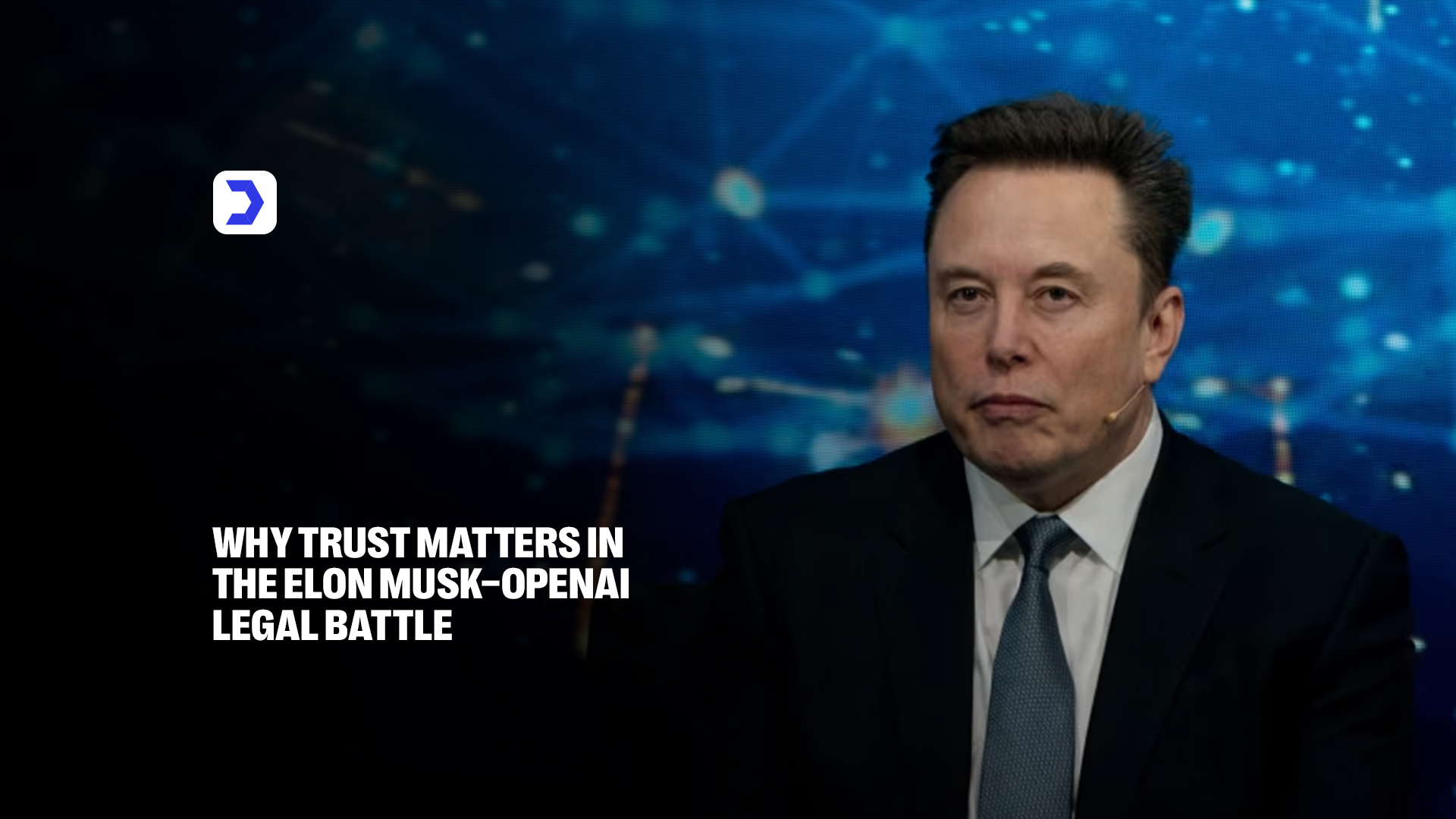
The intersection of ethics, ambition, and corporate governance has reached a fever pitch as the Silicon Valley trial of the decade nears its conclusion. For weeks, a federal courthouse in Oakland has served as the stage for a bitter confrontation that transcends mere financial disputes, focusing instead on the fundamental integrity of the most powerful entities in AI. As a leading voice in technical analysis, Digital Software Labs recognizes that this legal friction represents a pivotal moment for the industry, where the very definition of a “founding agreement” is being contested under oath. The case, brought by Elon Musk against OpenAI, its CEO Sam Altman, and President Greg Brockman, centers on allegations that a charitable mission was surreptitiously traded for a multi-billion-dollar for-profit engine. With a jury set to deliberate on Monday, May 18, 2026, the tech world watches closely to see if the legal system will uphold the original non-profit vision or validate the aggressive commercial scaling that has defined the company’s recent history.
Trust and credibility under the microscope
At the heart of the litigation lies a profound question of reliability between the industry’s most influential figures. Elon Musk has characterized the transition of OpenAI as a betrayal of public trust, famously stating that “it’s not OK to steal a charity” during his testimony. His legal team has sought to frame the shift toward a for-profit structure, fueled by massive investments from Microsoft as a breach of the altruistic pact made in 2015. This narrative suggests that the financial backing provided by the world’s richest man was obtained under the guise of safe, open-source development, only to be leveraged for private gain once the technology reached a state of immense profitability.
Conversely, the defense has painted a different picture of the company’s evolution and the motivations of its critics. Lawyers for the firm argue that Elon Musk was not only aware of the need for a for-profit arm to sustain the astronomical costs of AI compute but that he actively attempted to gain total control before departing in 2018. They contend that the lawsuit is a tactical move to slow down a superior competitor while his own venture, xAI, attempts to close the gap. During the proceedings, the credibility of leadership was a recurring theme, particularly regarding Sam Altman’s tenure. To understand the broader operational changes occurring behind the scenes, one can look toward the OpenAI leadership restructuring, which demonstrates how the organization is evolving its executive roles to handle special projects and business adoption. This internal shuffling reflects a company preparing for a massive public footprint, even as it defends the legitimacy of its current path.
The battle for public opinion has been just as intense as the courtroom drama. AI safety advocates have used the trial to highlight the risks of concentrated power, while investors focus on the company’s potential trillion-dollar valuation. The tension between being a “check on Google” and becoming a closed-source behemoth remains the central friction point. The outcome of this trial will likely set a legal precedent for how non-profit organizations can, or cannot, restructure themselves when their intellectual property suddenly becomes the most valuable asset on Earth.
Personal rifts and power struggles
The legal arguments are often overshadowed by the raw, personal animosity between the co-founders. What began as a collaborative effort to ensure a beneficial future for humanity has devolved into a saga of leaked emails, secret diaries, and public barbs. Witness testimony from former insiders has described a “pattern of behavior” that led to the brief ouster of Sam Altman in late 2023, a move that Elon Musk’s lawyers cite as evidence of a deeper culture of dishonesty. The trial has exposed the cracks in a once-unified front, revealing that the struggle for control over AGI (Artificial General Intelligence) started much earlier than previously believed.
The financial stakes of this feud are staggering, involving claims of $150 billion in damages and a demand for the redistribution of funds back to the original non-profit arm. This comes at a time when the organization is successfully courting a wider range of capital to fuel its expansive roadmap. The scale of support for the company’s vision is evident in the OpenAI retail investor funding round, which shows how the firm has mobilized a record-breaking $122 billion from various sources to cement its market position. This massive influx of capital underscores why the legal battle is so critical; the winner will effectively dictate the governance of a technology that could reshape every global industry.
While Elon Musk remains in parts unknown on diplomatic business, his absence from the closing arguments has not diminished the impact of his allegations. The defense continues to argue that his claims of “betrayal” are contradicted by his own early participation in discussions regarding for-profit pivots. The jury must now decide whether the “founding agreement” was a legally binding contract or merely a shared aspiration that naturally changed as the technical reality of building AI became more expensive. As the verdict looms, the tech community remains divided over whether the ends, advancing the frontier of intelligence, justify the means of corporate restructuring.
For ongoing coverage of how these legal developments impact the broader technology market, you can find the latest updates at the Digital Software Labs news section, where we provide continuous analysis on the intersection of law and innovation. Regardless of the specific verdict, the “trust gap” between these titans of industry has been permanently exposed. The trial has pulled back the curtain on the intense internal politics of Silicon Valley, proving that even as we build machines capable of logic, the human elements of ambition, jealousy, and ego remain the primary forces driving the future of AI.