Summary:
- Sam Altman’s tweet thanking coders for their “character-by-character” work was widely mocked as a “eulogy” for the profession.
- The comments landed during a period of massive industry layoffs, where AI is increasingly cited as the primary reason for job cuts.
- The internet responded with biting Google memes, satirizing the disconnect between billionaire CEOs and the displaced workforce.
- Critics argue Sam Altman’s AI promotes “vibe coding,” which prioritizes speed over the human-led precision required for security.
- The controversy highlights ongoing fears regarding “delusional” AI outputs and the loss of human experts who actually understand the code.
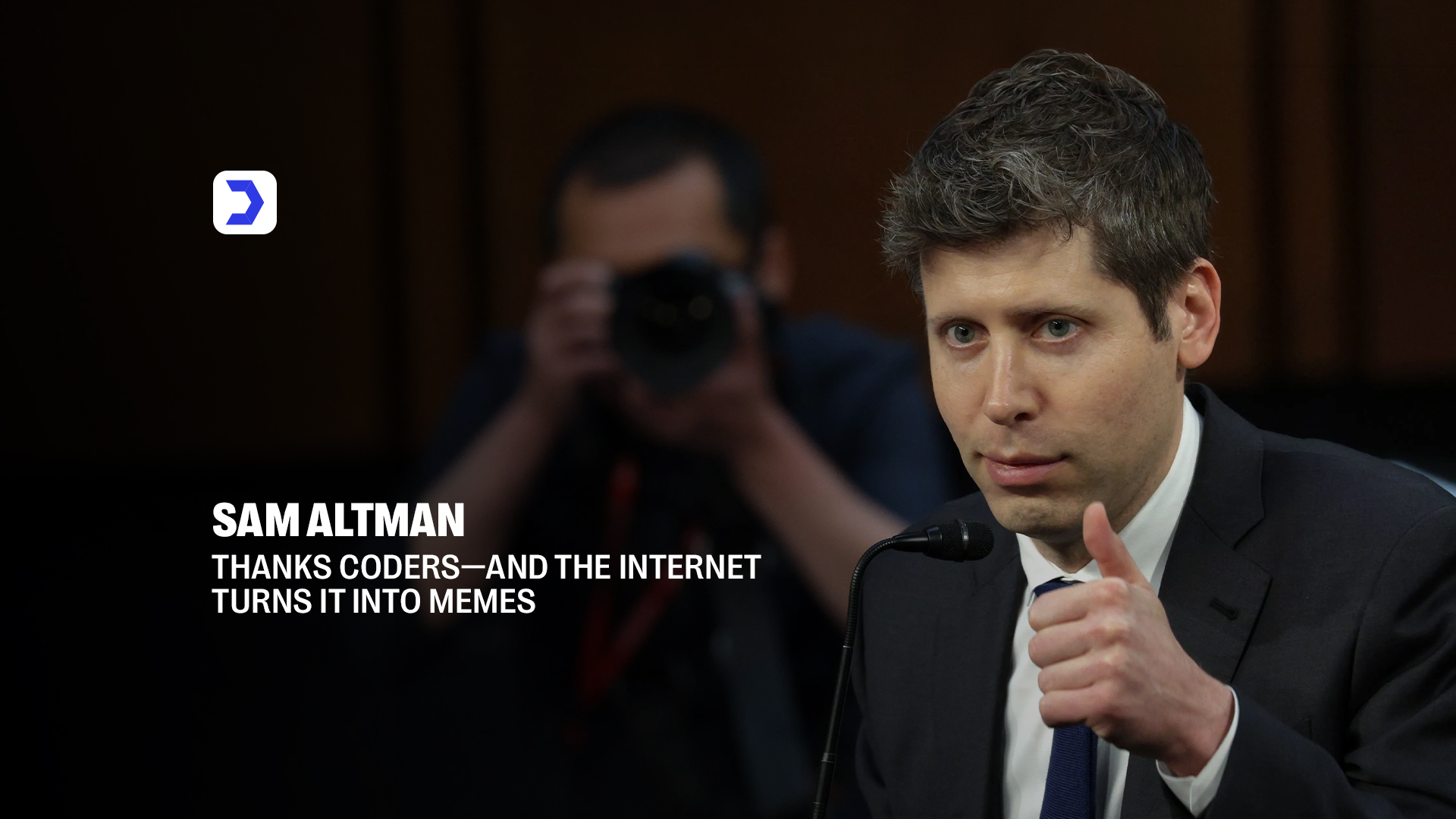
The tech industry in 2026 is a landscape of paradoxes. While corporate balance sheets are swelling with record-breaking AI-driven profits, the human foundation of that success, the software engineers, is facing a transition that feels less like an evolution and more like an eviction. This tension reached a boiling point this week when OpenAI CEO Sam Altman took to X (formerly Twitter) to express his “gratitude” to the coding community. What was intended as a sentimental reflection on the history of software development quickly spiraled into a viral phenomenon of mockery, as the internet reacted with a flurry of Google memes and biting sarcasm.
On Tuesday morning, Sam Altman shared a post that immediately set the developer community on edge. “I have so much gratitude to people who wrote extremely complex software character-by-character,” he wrote. “It already feels difficult to remember how much effort it really took. Thank you for getting us to this point.”
To the casual observer, this might seem like a harmless tribute to human ingenuity. However, to a software engineer currently navigating a job market defined by layoffs, the subtext was loud and clear: Thanks for the ladder, but we don’t need you to hold it anymore. The phrase “getting us to this point” was interpreted by many as a polite way of saying “you are no longer required for the journey ahead.”
This sentiment is particularly jarring when viewed through the lens of current industry warnings, as some legal experts and AGs warn Microsoft, OpenAI, and Google over delusional AI outputs that could potentially mislead users or create systemic risks if left unchecked. The irony of thanking human coders for their “character-by-character” precision while replacing them with models that still struggle with factual accuracy was not lost on the public.