Summary
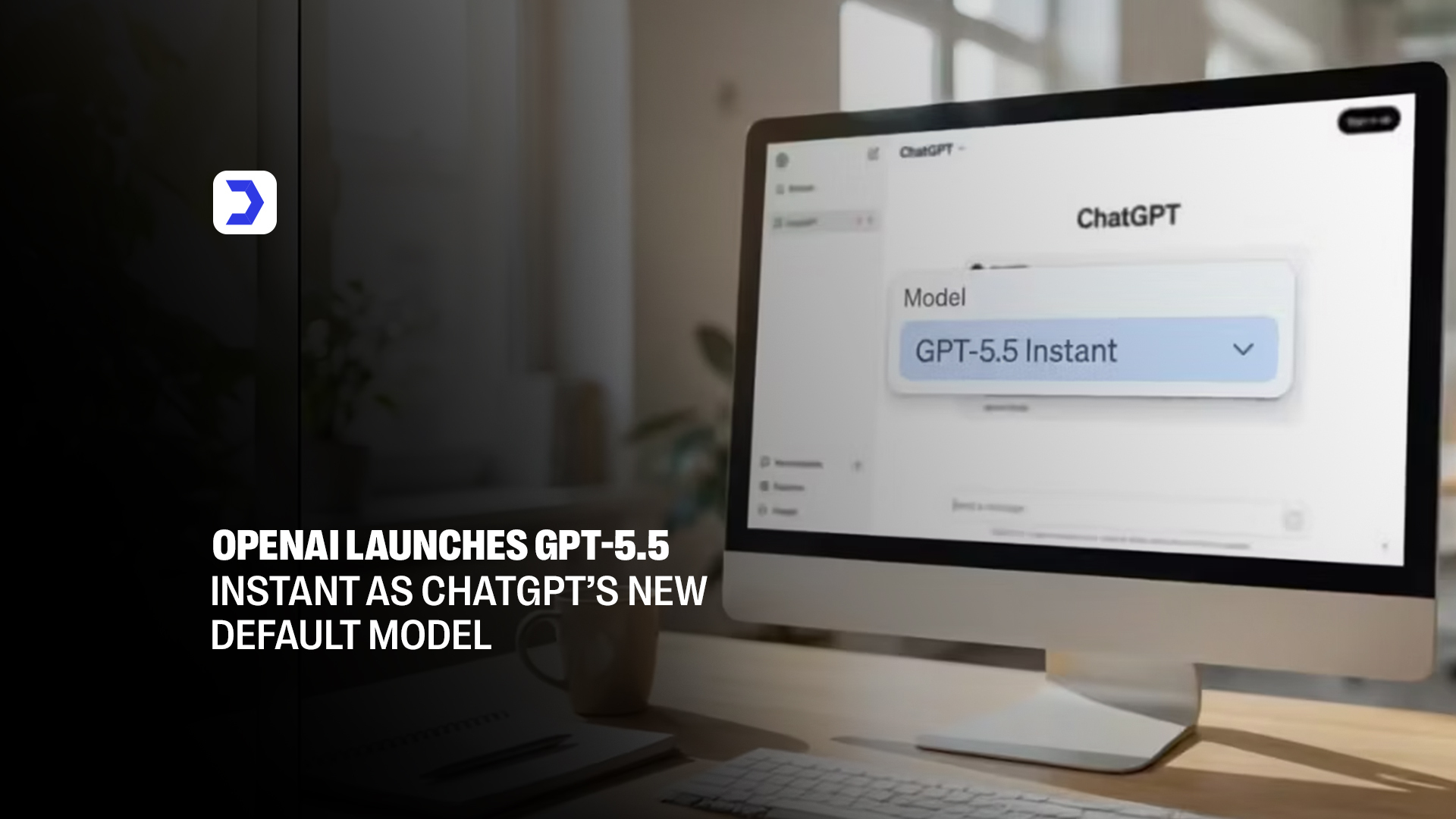
- OpenAI has officially replaced GPT-5.3 Instant with GPT-5.5 Instant as the new default model for ChatGPT, aiming to provide a smarter and faster daily experience for all users.
- The model achieves a 52.5% reduction in hallucinations on high-stakes topics such as medicine and law, and it scored an impressive 81.2 on the AIME 2025 math benchmark.
- This latest AI advancement features a more concise output style, using 30.2% fewer words to deliver high-utility answers while maintaining a natural, conversational tone.
- New personalization and memory source tools allow ChatGPT to intelligently use context from past conversations, uploaded files, and connected Gmail accounts while giving users full control to view or delete that data.
The landscape of generative AI is shifting as OpenAI introduces GPT-5.5 Instant, a model designed to balance high-speed responsiveness with a significant reduction in inaccuracies. This update marks a transition for ChatGPT as it replaces GPT-5.3 Instant with a more reliable default experience intended for hundreds of millions of daily users. By prioritizing lower latency and fewer hallucinations, the new model aims to provide smarter answers without the “confidently wrong” outputs that have historically challenged large language models.
A focus on everyday use
The primary design goal for GPT-5.5 Instant is to serve as a powerful daily workhorse for learning and professional tasks while maintaining a warm, conversational tone. To support this mission, OpenAI has improved the model’s ability to handle technical writing, translation, and info-seeking questions more effectively than its predecessor. One of the most notable technical achievements is a 52.5% reduction in hallucinated claims within sensitive domains such as law, medicine, and finance.
Personalization is deeply integrated into the new experience, allowing the AI to draw context from past conversations, uploaded files, and even connected Gmail accounts to deliver tailored responses. This enhanced capability is managed through a new “memory sources” feature, which provides transparency by showing exactly what data was used to customize an answer. Digital Software Labs is dedicated to navigating these rapid shifts in the AI landscape, much like the strategic OpenAI leadership restructuring brings an expanded role for COO Brad Lightcap that prioritizes operational scaling during periods of intense product growth.
Competing models and availability
GPT-5.5 Instant is currently rolling out to all ChatGPT users, including those on the free tier, though usage limits apply. Free accounts can send up to 10 messages every 5 hours, while Plus and Go users have a higher cap of 160 messages every 3 hours. In terms of performance, the model is designed to be more concise, using roughly 30.2% fewer words than previous versions to deliver high-utility answers without unnecessary verbosity or emojis.
This release follows a trend of massive capital requirements for cutting-edge development, highlighted when OpenAI raised funds from retail investors in a record-breaking funding round to maintain its competitive edge against rivals like Anthropic’s Claude 4.7. While GPT-5.5 Instant excels at text and image analysis, OpenAI continues to recommend GPT-4o for live voice applications due to its native audio response times. Developers can now access GPT-5.5 via API under the “chat-latest” label, while the older GPT-5.3 remains available for a three-month transition period.
The launch of GPT-5.5 Instant represents a major milestone in OpenAI’s effort to make ChatGPT a more dependable and personalized assistant. With its substantial improvements in math and science benchmarks, such as scoring 81.2 on the AIME 2025 test, the model is better equipped for complex logical reasoning than any previous “Instant” iteration. By combining this intelligence with native agentic behavior and improved token efficiency, the new default model aims to transform the way individuals and businesses interact with AI daily. Digital Software Labs offers expert guidance through its platform for those seeking to implement these advanced tools into their own workflows as the technology continues to evolve.