Summary
- OpenAI is actively pushing to integrate autonomous AI agents into everyday desktop software, web applications, and business workflows.
- Adoption depends heavily on intuitive user interfaces, clear progress tracking, and human-in-the-loop approval checkpoints for high-risk actions.
- Specialized skill harnesses enable agents to dynamically execute complex, multi-step tasks like coding, data management, and enterprise operations.
- Intense competition among leading tech companies and massive capital investments are accelerating the rapid rollout of agentic technologies.
- Robust security guardrails, strict architectural boundaries, and mechanical verification loops are essential to ensure user safety and trust.
The global technology landscape is undergoing a monumental shift as artificial intelligence evolves from a reactive chat interface into autonomous, execution-focused agents. Leading this charge is OpenAI, which envisions a world where autonomous systems interact directly with software environments, desktop apps, and enterprise workflows to perform complex multi-step tasks. However, as AI capabilities advance from answering queries to independently carrying out actions on behalf of humans, a critical question emerges: are users and businesses truly ready to grant these systems full operational autonomy?
As covered across our dedicated Digital Software Labs news updates, the race toward agentic computing is redefining how humans interact with machines. With tech giants racing to ship computer-use interfaces, background execution harnesses, and standardized skills, the industry is entering an unmapped frontier. Understanding this transformation requires examining how developers design intuitive agent interfaces, how tools are equipped with operational licenses, how aggressive tech rivalries shape software architectures, and what structural boundaries must exist to keep autonomous models safe and reliable.
How to make AI intuitive
Transitioning users from text-based prompts to semi-autonomous agents presents a massive user experience challenge. Early conversational models depended entirely on manual human steering: a user would enter a prompt, evaluate the response, and manually type follow-up instructions to refine the result. Autonomous agents, by contrast, act independently over long horizons. They plan steps, interact with web browsers, invoke command-line scripts, and handle exceptions without constant human oversight. Making this level of complex execution feel natural requires an interface that balances transparency with minimalism.
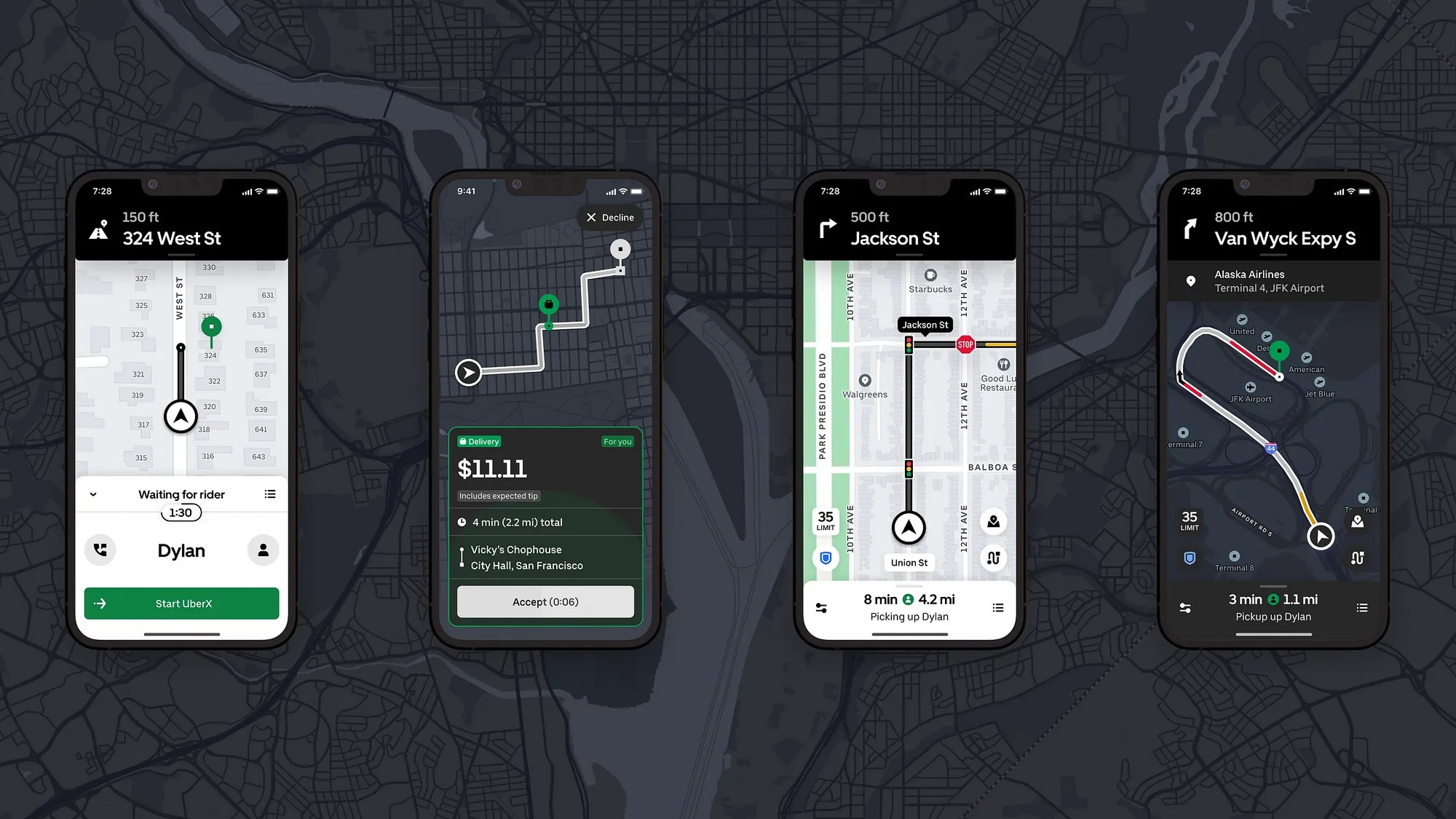
To make an autonomous agent intuitive, design architectures must move away from simple chat logs and adopt structured progress visualization. When an execution-focused model runs, users need to see real-time updates outlining what the system is doing: which browser tab it opened, which database query it executed, and which security boundary it evaluated. Without clear legibility into the model’s internal decisions, users experience friction and anxiety over whether the agent is performing actions correctly.
Moreover, intuitive design requires smooth delegation models. Modern implementations utilize human-in-the-loop checkpoints, where an agent autonomously handles routine data gathering or multi-step execution but pauses to request explicit human confirmation before taking irreversible actions, such as submitting legal contracts, issuing financial payments, or pushing production code deployments. By creating clear boundaries between automated execution and human sign-off, software platforms ensure that complex autonomous operations remain approachable, manageable, and trustworthy for non-technical users.
Giving ChatGPT a license to skill
For an autonomous system to perform useful tasks, it needs more than high-level general intelligence; it requires specialized execution capabilities. OpenAI addressed this requirement by introducing standardized, reusable task bundles known as “Skills” across ChatGPT and its developer platform. In technical terms, a skill acts as an operational license: it combines specific natural-language playbooks, domain rules, API schemas, and execution scripts into a structured package that the underlying model can read and execute on demand.
Instead of requiring users to paste lengthy, repetitive instructions into every prompt session, skills allow individuals and enterprise teams to define standardized workflows once. Recent developments detailed in our report on ChatGPT Codex agent software capabilities show how these skill harnesses enable agents to inspect code repositories, execute continuous integration pipelines, and resolve system issues with minimal human intervention.
By empowering models to select relevant skills dynamically based on context, developers are building systems capable of navigating complex, multi-tiered business processes. Whether standardizing legal compliance reviews, structuring accounting procedures, or automating data entry across third-party software applications, equipping models with structured execution skills transforms chat platforms into capable digital co-workers.
The rivalry that drove OpenAI’s product design
The aggressive pace of agent deployment stems from intense market competition across the artificial intelligence sector. Silicon Valley incumbents and emerging research labs are locked in a high-stakes race to control the primary desktop and enterprise user interface of the future. When competitors like Anthropic introduced specialized agent workflows and plugin ecosystems like Claude Cowork into the market, the pressure intensified for market leaders to rapidly roll out equivalent desktop automation and browser-control features.
This competitive rivalry forced a fundamental pivot in product design:
- From Text Windows to Action Canvas: Systems shifted from providing text responses to actively manipulating software applications, desktop environments, and web interfaces.
- From Ephemeral Prompts to Versioned Assets: Workflows evolved from ephemeral chat sessions into persistent, version-controlled execution plans stored directly inside software repositories.
- From Isolated Chat to Multi-Agent Collaboration: Software architectures transitioned toward multi-agent feedback loops, where dedicated execution agents draft solutions and specialized reviewer agents validate code and output quality.
Fueling this rapid expansion is an unprecedented capital investment strategy. As highlighted in our breakdown of OpenAI retail investor funding momentum, massive financial rounds provide the immense compute power and engineering resources required to train foundation models capable of complex, multi-hour spatial and logical reasoning. This capital arms race ensures that product design is driven not just by incremental software updates, but by rapid, sweeping architectural leaps designed to lock in enterprise dominance.
What makes a good harness, anyway?
As AI agents gain broader system access, the technical architecture surrounding the core language model, known as the agent harness, becomes the ultimate factor determining real-world success or failure. An agent harness is the structural framework, set of constraints, and environment tooling that wraps around an AI model to govern how it reads context, runs tools, and executes commands. Without a well-designed harness, even powerful models fail by getting trapped in endless loops, hallucinating invalid commands, or cluttering their context windows.
A successful agent harness does not micromanage implementation details; it enforces strict architectural boundaries, maintains system legibility, and provides deterministic verification tools so models can validate their own work independently.
Engineering leaders emphasize that building an effective harness requires adhering to core design rules:
- Strict Architectural Boundaries: Pushing models into rigid, predefined application layers with custom linting checks to ensure code updates remain clean and maintainable.
- Context Budgeting: Restricting high-level skill listings and instruction files so they use only a small percentage of the total context window, preserving space for actual execution tasks.
- Mechanical Verification Loops: Equipping agents with local test runners, automated evaluation scripts, and compiler feedback so they detect and fix errors before delivering final outputs.
- Safety and Boundary Guardrails: Restricting unauthorized file system access, preventing unsafe system modifications, and ensuring sensitive user information remains secure.
As AI platforms expand into broader demographic markets, including educational platforms and younger user segments, safety harnesses become essential. Detailed in our analysis of OpenAI open-source teen safety guardrails, robust safety frameworks prove that effective containment systems are vital for maintaining public trust while deploying autonomous models across public and enterprise environments.