Summary
- Under the visionary direction of Elon Musk, the newly structured SpaceX AI division has officially deployed its highly anticipated next-generation architecture.
- This powerful release introduces Grok 4.5, a frontier-class coding and agentic reasoning tool built to manage entire multi-file software projects simultaneously.
- The sudden launch places this system on a direct collision course with OpenAI, fueling the rapid competitive race to control the enterprise developer market.
- By integrating directly with developer tools, the model aims to outperform traditional general-purpose platforms like ChatGPT on specialized software engineering tasks.
- This strategic release demonstrates how targeted data training, cost-efficient token pricing, and agentic workflows are defining the future of automated coding platforms.
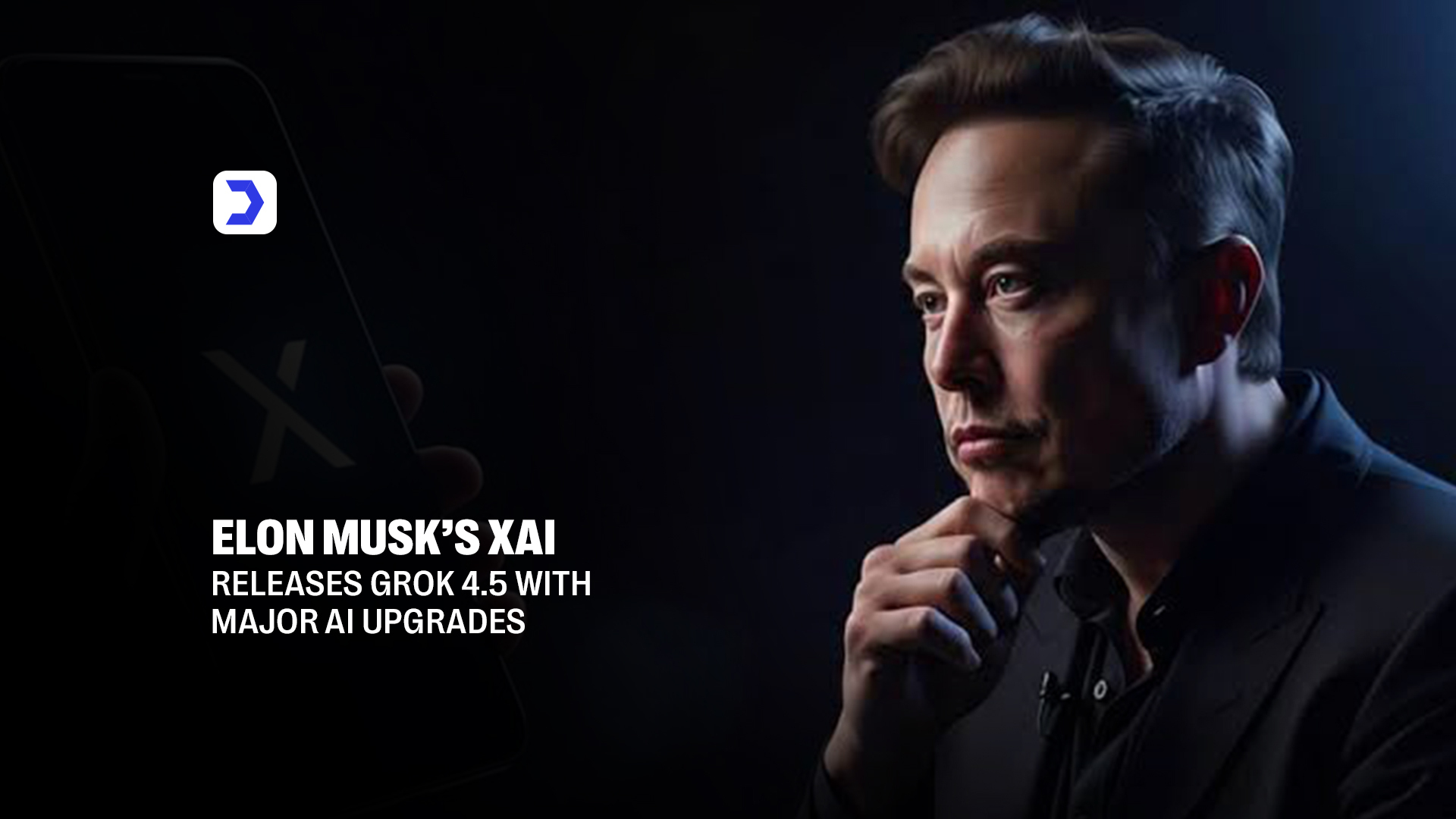
The global software ecosystem witnessed another monumental shift as Elon Musk officially announced the public deployment of Grok 4.5, a highly anticipated model optimized specifically for complex programming, agentic reasoning, and repository-scale codebase manipulation. Developed under the newly integrated SpaceX AI division, following a series of massive structural consolidations within xAI’s computing infrastructure, this frontier-class upgrade marks a transition from simple chat interactions to high-throughput autonomous software development workflows. This launch represents a major leap in how large-scale networks process information, moving past basic single-file text prompts to actively executing tasks that span entire developer frameworks. At Digital Software Labs, we closely evaluate how rapidly evolving platform releases and technology breakthroughs influence enterprise programming productivity, and this latest iteration offers some of the most compelling code-generation capabilities seen to date. By training the model on trillions of specialized tokens, the engineering team has addressed the critical context bottlenecks that traditionally limited artificial intelligence models. Rather than operating within narrow sandboxes, the architecture acts as a persistent developer agent that can autonomously execute commands, trace complex bugs across distinct dependencies, and refactor existing modules.
Elon Musk compares it directly to Anthropic’s Opus
During the release announcements, Elon Musk positioned Grok 4.5 as a direct challenger to Anthropic’s flagship Claude Opus, claiming that this new system delivers comparable, high-level reasoning while operating at a fraction of the cost. He emphasized that the era of slow, expensive processing is coming to an end, as new architectures deliver rapid outputs without sacrificing technical depth. This aggressive push directly challenges the current market equilibrium established by OpenAI, whose platforms have long dictated the pace of enterprise integration. It is particularly interesting to watch how these major corporations adjust, especially considering that unprecedented executive moves and deep organizational modifications at competing firms have recently disrupted the competitive hierarchy, forcing massive strategy shifts across the tech corridor. As these institutions scramble to reorganize their internal divisions and engineering talent, the race to capture the developer market has turned highly combative. While legacy engines like ChatGPT still maintain a dominant share of general conversational queries, the focus has shifted heavily toward highly specialized engineering agents.
Because Grok 4.5 was trained directly alongside the developer tool Cursor using millions of real developer sessions, it has inherited an intuitive understanding of developer intent that generalized models struggle to replicate. Instead of producing isolated code snippets that require manual debugging, the system evaluates how a single change ripples through an entire software project. This contextual awareness represents a major competitive advantage, as developers prioritize models that actively understand how their local file systems and active dependencies interact, saving countless hours of manual integration. Furthermore, this level of contextual integration dramatically reduces the cognitive load on engineering teams, allowing them to iterate and deliver major software updates much faster than traditional general-purpose AI tooling permits.