Summary
- OpenAI is pushing ChatGPT toward an ecosystem model inspired by Amazon, but the rapid expansion is creating gaps in consistency and usability.
- The integration of multiple AI features has increased capability, yet the overall experience often feels complex, making it harder for users to rely on ChatGPT as a stable, all-in-one solution.
- Compared to Amazon’s gradual and structured growth, ChatGPT’s fast-paced development is leading to uneven performance and a lack of seamless feature integration.
- The broader AI space is evolving quickly, and ongoing developments covered in Digital Software Labs news show how structured updates and clarity can influence long-term user trust.
- ChatGPT remains a powerful AI platform, but its success as a scalable ecosystem will depend on improving reliability, simplifying user experience, and aligning innovation with consistency.
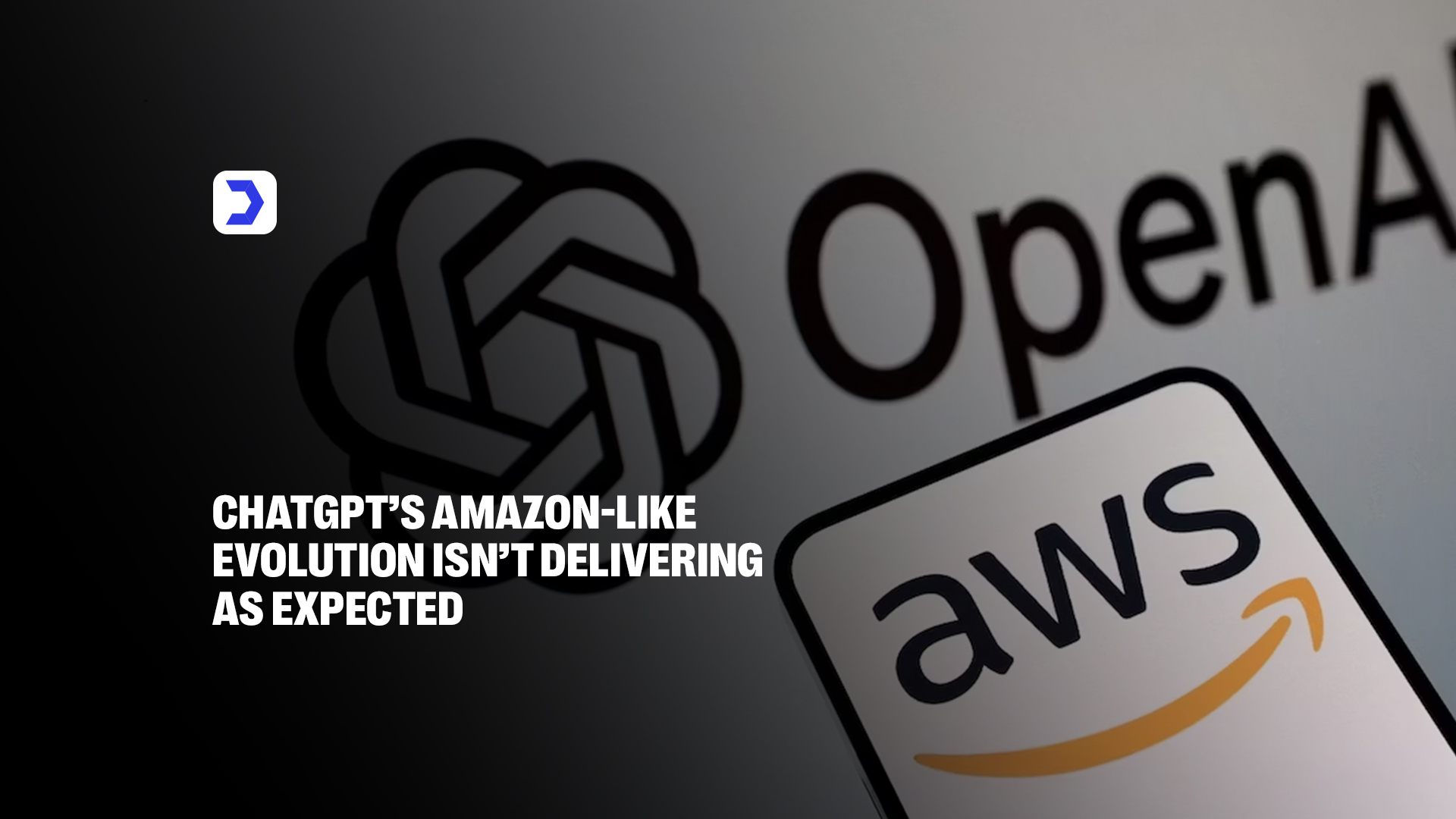
The rise of OpenAI has reshaped how people interact with technology, with ChatGPT becoming a central force in that transformation. What began as a conversational assistant has rapidly moved toward a broader vision, one that resembles the ecosystem approach pioneered by Amazon.
The intention is clear: build a single environment where users can search, create, automate, and even transact. Yet, despite this ambitious direction, the results are not aligning with expectations. The expansion has introduced complexity, uneven performance, and a growing disconnect between what users expect and what they experience. This shift is happening at a pace that leaves little room for stability, making it harder for users to fully adapt to the evolving system. At the same time, broader technology updates, like those covered in Digital Software Labs news, show how structured rollouts often lead to stronger user trust, something AI platforms are still working to achieve.
Battle of the giants
The competition surrounding AI has intensified, with OpenAI pushing ChatGPT forward while established ecosystems continue to raise the standard. The comparison with Amazon highlights a critical gap, Amazon built its ecosystem gradually, while ChatGPT is scaling rapidly, often before achieving full stability.
This contrast becomes clearer when looking at how other tech advancements are introduced. Structured updates, like those in Android 16’s smarter alerts and UI upgrades, show how improvements in notifications, privacy controls, and system behavior are rolled out with clarity and user-focused design. These updates emphasize smarter notification summaries, better alert organization, and refined system controls that enhance usability without overwhelming users.
In comparison, ChatGPT’s expansion often feels layered rather than unified. Features arrive quickly, but the experience can feel inconsistent, making it harder for users to rely on the system with the same confidence they place in mature platforms.
Another major factor in this battle is reliability. Amazon built trust by delivering predictable outcomes, while ChatGPT still faces variation in accuracy and performance depending on the task. This inconsistency becomes more noticeable as expectations rise.
As the AI space grows more competitive, the focus is shifting from who innovates fastest to who delivers the most stable and dependable experience. ChatGPT remains a powerful contender, but in this evolving landscape, consistency is becoming just as important as capability.