Summary
- OpenAI introduced ads to ChatGPT to support long-term operational costs while keeping the free tier accessible for general users.
- Paid plans remain ad-free, preserving a cleaner workspace for professionals, developers, and enterprise teams relying on stable AI performance.
- OpenAI’s financial model evolves, influenced by infrastructure growth, rising compute needs, and leadership direction under Sam Altman.
- Developers benefit from stability, as ads do not interfere with API responses or app integrations built on OpenAI’s ecosystem.
- Competition from Anthropic and major AI firms accelerates OpenAI’s shift toward sustainable revenue strategies while maintaining innovation momentum.
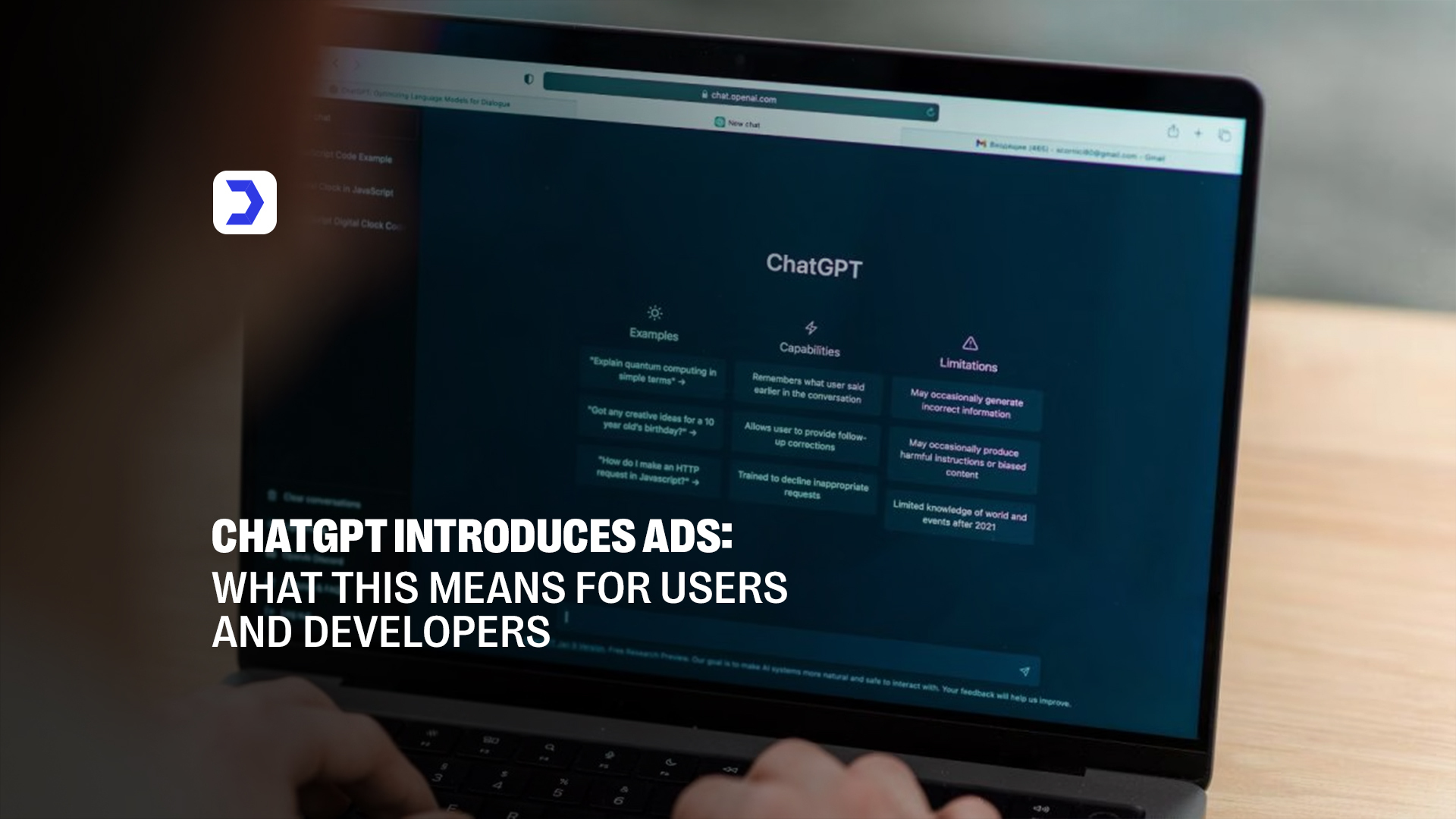
OpenAI surprised the tech world once again with a major update: ChatGPT is officially introducing ads inside the platform. What started as an early experiment has now shifted into a strategic revenue path, one that could reshape the AI landscape for consumers, developers, and the broader competitive environment involving firms like Anthropic.
In the midst of rapid innovation cycles, this move marks a turning point. For years, users enjoyed an ad-free conversational AI experience, but the economics of large-scale AI systems hinted that this moment would eventually arrive. The question now is not why ads exist, but what this change practically means for everyday users and the developers who rely on ChatGPT-powered tools and workflows.
OpenAI’s Ad Initiative
OpenAI’s introduction of ads within ChatGPT represents a shift toward sustainable monetization. Large-scale AI models demand extraordinary computational resources, and even with premium subscriptions, the long-term economics require additional pathways. This ad initiative offers that balance, without disrupting the core conversational experience.
OpenAI confirmed that ads will appear only for free-tier users, beginning with small, carefully monitored placements. The company also emphasized that the ads will prioritize relevance and avoid invasive tracking practices. This approach signals a preference for subtle monetization rather than overwhelming commercialization.
The direction becomes even clearer when looking at how the AI industry adapts to accelerating competition. One recent report on Digital Software Labs analyzes how OpenAI responded to Google’s internal concerns about competitive pressure following a leaked internal memo. That narrative surfaces mid-analysis in the GPT-5.2 response breakdown, where OpenAI’s tactical adjustments offer context for why ads appear now: faster model updates and infrastructure scaling require consistent revenue channels.
The move also reflects a broader trend: AI models are no longer experimental tools. They’re becoming daily utilities. Monetizing them sustainably ensures that innovation does not slow down as demand increases globally.
No Ads for Higher-Tier Plans
OpenAI clarified that paid plans will remain ad-free. Users subscribed to ChatGPT Plus, Team, Enterprise, or EDU will continue receiving a clean interface without sponsored responses or embedded suggestions. This preserves the premium value proposition while protecting professional and academic workflows from distractions.
For developers, this distinction matters. Apps and services built on top of OpenAI’s API need stable, uninterrupted outputs. By keeping ads outside these paid experiences, OpenAI reassures engineers, product teams, and enterprise clients that their integrations will remain predictable.
This tier-based separation also aligns with broader discussions around safety expectations, quality control, and reliability in professional AI environments. Digital Software Labs previously covered a story detailing how regulatory attention is rising around AI output quality and potential distortions. That sentiment surfaces mid-context in the Attorney General’s AI warning, where regulators address concerns about misinformation and accuracy in generative AI systems. Keeping ads away from paid tiers may be a preemptive measure to avoid complicating these conversations.
Additionally, OpenAI continues rolling out new features that reinforce the value of premium plans. A recent update added group chat functionality for global collaboration, strengthening communal use cases. This improvement appears mid-discussion in the group chat expansion report, showing how OpenAI strategically reserves advanced experiences for paid subscribers.
For now, free users carry the monetization load through ads, while premium users retain a professional-grade environment.
OpenAI’s Financial Plans
To understand why ads were inevitable, it’s important to look at OpenAI’s financial strategy. The company’s operational scale has expanded dramatically. Training and running large AI models costs hundreds of millions annually, and global usage continues to grow across personal, enterprise, and developer ecosystems. Ads provide a recurring revenue stream that supplements API income and subscription fees.
Sam Altman, CEO of OpenAI and a prominent figure in AI advancement, has repeatedly emphasized the need for sustainable financial models. Yet he remains notably private about OpenAI’s exact revenue numbers. That tone surfaced mid-analysis in a recent Digital Software Labs article covering Altman’s comments, found in the OpenAI revenue discretion report, which reinforces how the company balances transparency with strategic silence.
As competitive pressure rises, particularly from Anthropic and Google DeepMind, OpenAI is sharpening its approach. Ads represent not a shift in philosophy but an evolution in financial maturity.
OpenAI must:
- Maintain affordable access for new users
- Generate revenue to support ongoing model improvements
- Scale infrastructure to meet global demand
- Keep API costs stable for developers building AI apps
Without new capital sources, the strain on computational budgets would increase. Ads offer a middle path, allowing OpenAI to keep entry points open rather than limiting features behind paywalls.
Developers benefit from this stability as well. AI-powered apps rely on predictable API pricing and consistent model performance. Ads help stabilize the ecosystem without shifting the financial weight entirely onto developers or enterprise clients.
A broader industry view also shows why diversification matters. Digital Software Labs’ coverage of AI-driven growth across the tech space, accessible mid-narrative in the main news section, paints a picture of how fast the market is evolving. Ads give OpenAI the breathing room required to maintain pace without constraining innovation.