Summary
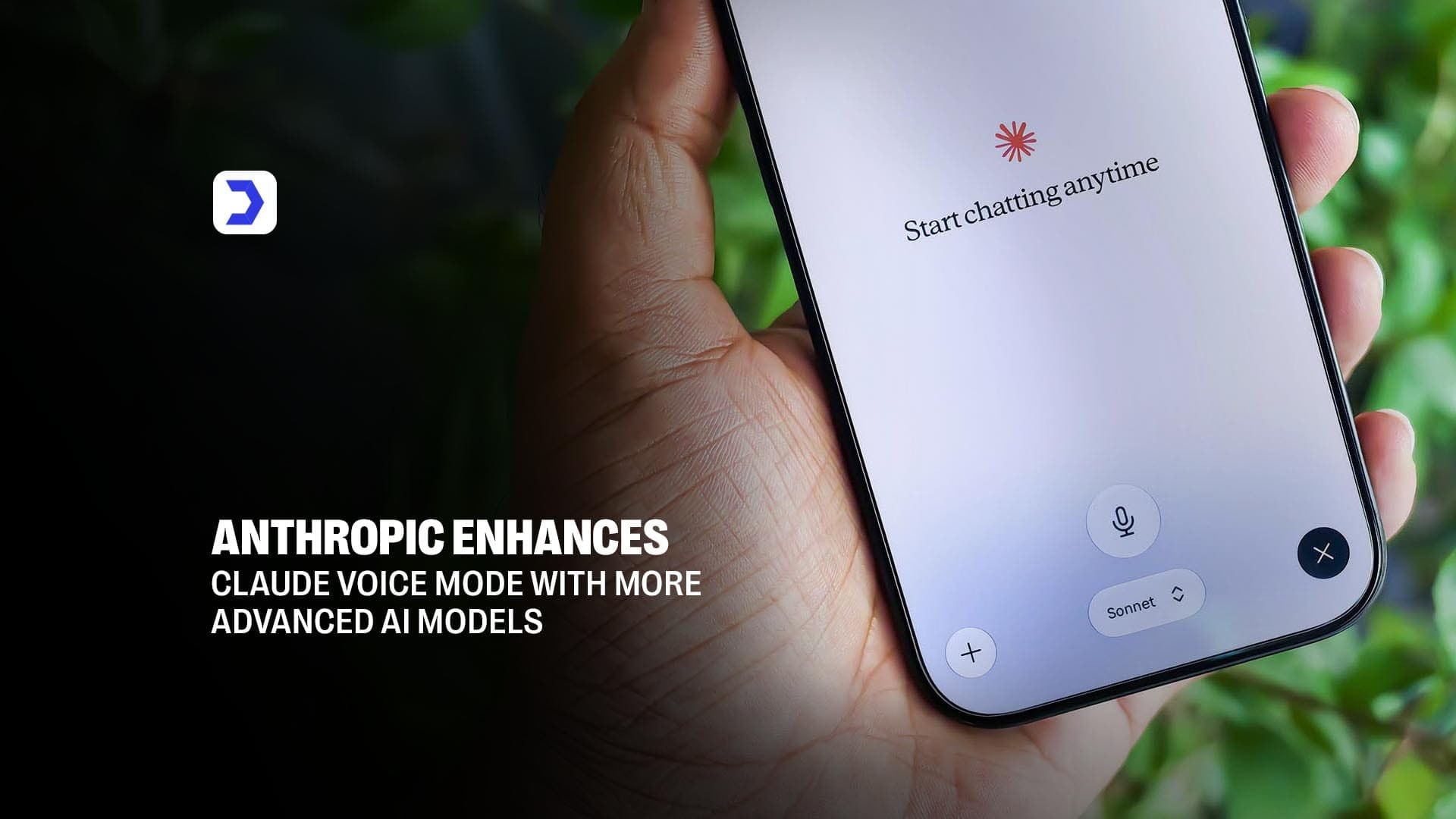
- Claude Voice Mode now incorporates advanced Opus and Sonnet models alongside Haiku, bringing high-level analytical reasoning to hands-free conversations.
- Users can fluidly switch between spoken and typed inputs, as well as change model tiers mid-conversation without losing context or history.
- Direct connection to productivity tools like Gmail, Slack, Google Calendar, and Notion allows spoken commands to execute real-world workplace tasks.
- The system offers enhanced translation and reasoning capabilities across multiple languages, including Spanish, French, German, Japanese, and Korean.
- Explicit user verification protocols and privacy guardrails ensure secure app interactions and protect sensitive personal data.
Artificial intelligence has rapidly shifted from traditional text-based interfaces to dynamic, natural voice interactions. Until recently, spoken interaction with leading conversational platforms often came with technical trade-offs. Voice modules were frequently tethered to faster, lighter model architectures designed primarily to maintain low latency rather than handle complex logical reasoning. As a result, users attempting to work through intricate problems hands-free often ran into the limitations of stripped-back reasoning engines. Anthropic is taking a major step toward eliminating this gap by integrating its most capable artificial intelligence systems directly into its vocal interface.
By bringing high-reasoning capabilities into voice interactions, the company is redefining how professionals, developers, and daily users communicate with digital assistants. Spoken queries no longer require simplified phrasing or superficial scope; instead, complex analytical tasks, strategic brainstorming, and structured problem-solving can now occur naturally in real-time conversation. This update reflects a broader movement across the tech landscape toward unified, multimodal interaction where speech serves as a first-class input method rather than a degraded secondary feature.
As artificial intelligence platforms evolve, the distinction between typing a prompt and speaking a command is rapidly dissolving. Users expect consistent intelligence across every modality, whether they are drafting code on a desktop computer, asking for document summaries via a tablet, or talking through complex logistical challenges while commuting with a smartphone. To keep up with these rapid developments across the broader tech ecosystem, readers frequently review the latest software developments on the Digital Software Labs News to analyze how fundamental model upgrades are reshaping everyday productivity workflows. By bridging the gap between high-tier reasoning engines and spoken interfaces, developers are opening up sophisticated enterprise applications that previously depended on manual text inputs.
Furthermore, this expansion represents a distinct strategic choice within the broader AI industry. While some platforms prioritize hyper-realistic vocal delivery, emotional inflection, and ultra-low-latency conversational flow, Anthropic has focused heavily on the underlying cognitive depth of the interaction. The goal is not merely to create an assistant that sounds human, but to build a hands-free workplace partner capable of working through multi-step logic, processing detailed business context, and executing meaningful tasks across productivity environments.
Claude Voice Mode Adds Opus and Sonnet
The decision to expand voice capabilities to the flagship Opus and Sonnet model tiers marks a fundamental shift in how the Claude platform processes spoken input. Previously, voice mode relied exclusively on Haiku, the lightweight model in the lineup designed for rapid response times and brief queries. While Haiku performed well for quick facts, simple translation tasks, and basic administrative reminders, it lacked the deep contextual reasoning required for high-level technical analysis, nuanced writing feedback, or multi-step logic.
With this release, users can now engage in voice conversations powered by Sonnet and Opus, drawing upon the same advanced reasoning frameworks that govern the platform’s high-tier text interactions. Sonnet provides a powerful balance of speed and deep analytical precision, making it ideal for daily coding tasks, complex research synthesis, and workflow organization. Meanwhile, Opus delivers top-tier cognitive depth, enabling users to talk through abstract theoretical problems, evaluate strategic business choices, or analyze intricate document structures out loud.
Crucially, the updated system allows users to switch between model families mid-conversation without losing their existing chat history or context. A user might begin a session with a quick voice query using Haiku, realize the problem requires deeper analysis, and seamlessly transition to Sonnet or Opus while continuing the exact same conversation. Speech and text are unified within a single continuous stream, allowing a user to start a project by typing a detailed prompt on a laptop, continue discussing the details via voice on a mobile device while away from their desk, and return to text editing later without fragmentation.
Alongside model upgrades, the system now integrates directly with popular third-party productivity tools and workspace platforms. Users can grant the voice assistant permission to interact with external applications, transforming spoken conversations into direct workplace actions. Through authorized connections, the assistant can check schedules, summarize unread message threads, pull documents, and initiate drafts across integrated software platforms:
- Email and Communication Tools: Search inbox threads, synthesize lengthy email chains, and draft verbal responses directly within connected accounts like Gmail and Slack.
- Scheduling and Calendar Systems: Review daily itineraries, identify scheduling conflicts, and adjust calendar entries using natural spoken commands.
- Document and Workspace Applications: Retrieve relevant information from connected document repositories, such as Google Docs, Notion, or Canva, to synthesize multi-page summaries or generate project outlines hands-free.
As automated agents gain access to connected enterprise applications and personal communication tools, maintaining strong security architectures, robust data privacy standards, and clear user permission protocols becomes paramount. Similar security initiatives can be seen across the industry, such as recent efforts regarding OpenAI’s launch of open-source tools for Teen Safety, which highlight how leading AI developers are releasing protective frameworks to ensure safe digital experiences. In Anthropic’s implementation, the voice interface explicitly requests user verification before performing active tool operations or modifying external data, keeping control in the hands of the user.