
Summary
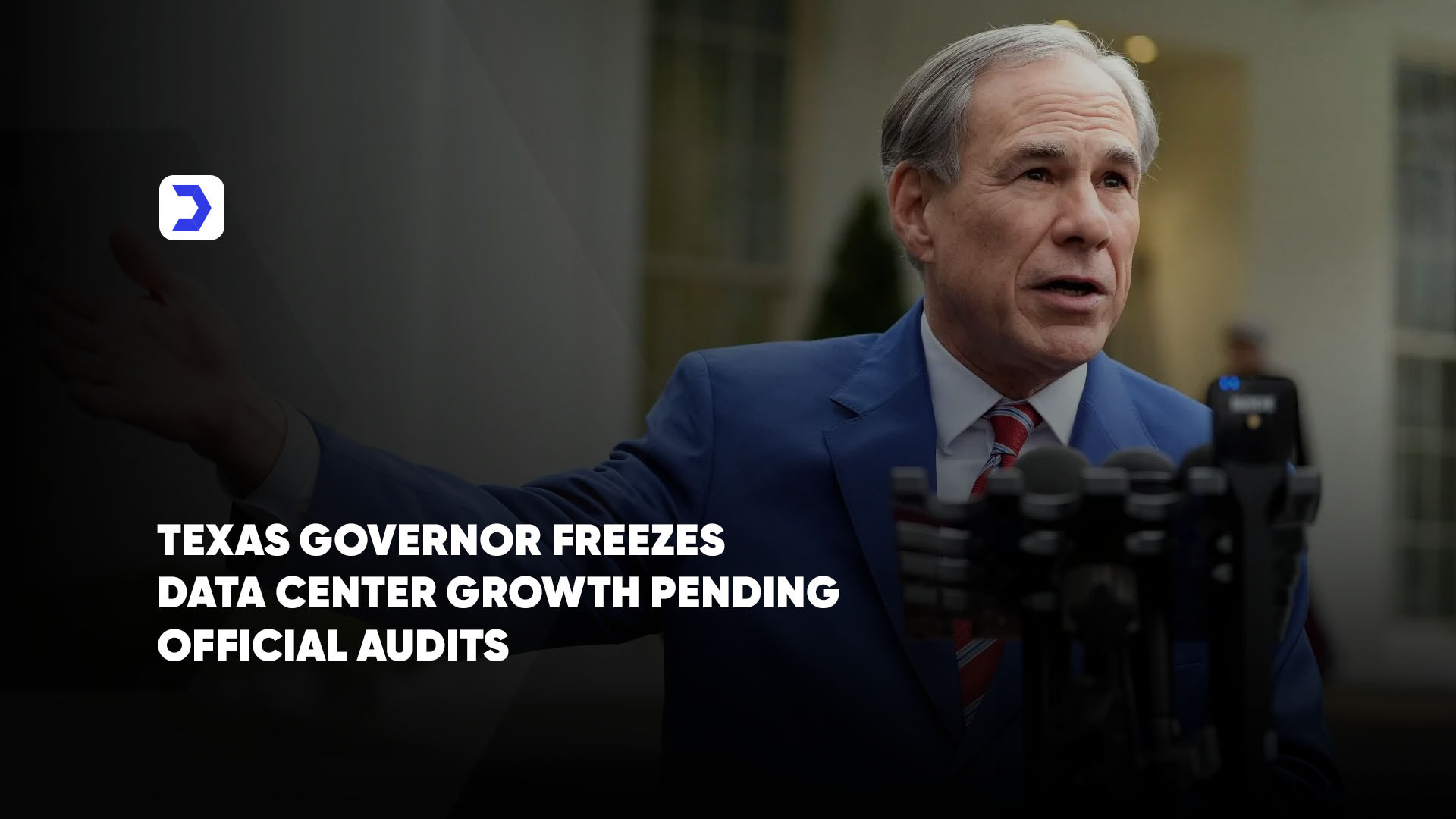
- Governor Greg Abbott ordered an immediate freeze on grid connection approvals for new data centers across Texas.
- The mandate requires PUCT and ERCOT government & policy audits to evaluate project power and climate impact metrics.
- Grid connection queue requests reached 474 gigawatts, with 90 percent driven by expanding AI computing demand.
- State audits require developer disclosures on utility usage, local tax incentives, and water consumption for data centers.
- Mandatory audit enforcement reflects a broader government & policy shift in Texas balancing AI growth against climate risks.
Texas Governor Greg Abbott announced an immediate freeze on grid connection approvals for new data center projects across the state. This executive action directs the Public Utility Commission of Texas (PUCT) and grid operator Electric Reliability Council of Texas (ERCOT) to conduct verification audits before permitting further infrastructure connection. Industrial expansion tied to artificial intelligence compute requirements altered regional energy projection models dramatically over recent months. ERCOT currently evaluates approximately 474 gigawatts of total connection requests, representing five times the historic peak electrical demand of the state grid. Data center operators account for roughly 90 percent of those total grid expansion filings.
The executive order requires developers seeking interconnection approval to submit comprehensive reports detailing project ownership, localized tax incentives, direct power consumption forecasts, on-site energy generation assets, and municipal water usage rates. State leadership cited non-compliance with preliminary regulatory surveys as the primary driver behind mandatory verification procedures. Unverified connection requests create phantom load estimates that skew municipal planning calculations and inflate long-term utility infrastructure projections. Under the issued executive mandate, developers failing to provide verified operational metrics will face immediate denial of state grid access.
This regulatory shift directly impacts tech companies scaling up heavy computational clusters across central and western Texas regional hubs. Massive expansion across modern computing infrastructure continues alongside broader corporate developments in consumer software safety and policy standards, including initiatives where OpenAI launches open-source tools for teen safety to mitigate risks associated with digital platforms. Regulatory oversight across computational technology spans both hardware infrastructure expansion and direct software deployments. As state regulators freeze grid queue reviews, technology enterprises balance physical infrastructure delays against software feature rollouts, operational timelines, and evolving legal frameworks.
The sudden policy intervention halts the ERCOT review process known as batch zero, forcing speculative grid requests out of active evaluation queues. State grid operators must ensure that baseline power delivery remains reliable during extreme heatwaves and sudden winter freeze events. Uncontrolled expansion of energy-intensive server farms threatens residential grid stability while driving up wholesale electricity pricing across regional utility markets. By pausing active approvals, public utility commissioners aim to separate legitimate industrial developments from uncapitalized speculative land holdings. Developers must now prove financial viability, clear environmental metrics, and independent energy mitigation plans before securing approval from regulatory authorities.
Possible Gaps in the Data Center Audits
Industry analysts and state lawmakers point to several procedural gaps in the mandated data center audit framework. While the executive order establishes a strict verification threshold, it lacks specific timeline commitments for completion or standardized benchmarks for evaluating local community impact. Municipal leaders express ongoing concerns regarding water consumption during severe droughts, as evaporative cooling towers in heavy compute facilities extract millions of gallons daily from local aquifers. Current regulatory audits depend heavily on self-reported developer documentation without establishing third-party site verification mechanisms or penalty structures for inaccurate submissions.
The audit framework focuses primarily on grid capacity while offering limited guidance on regional climate factors and local environmental degradation. Power generation required to sustain massive server farms increases carbon emissions, directly conflicting with municipal sustainability targets and clean energy goals. Facilities utilizing diesel backup generators for emergency power introduce localized air quality risks during extended grid outages. Without legislative mandates establishing hard limits on total resource extraction, state audits risk becoming temporary administrative delays rather than permanent regulatory protections. Tech developers navigate complex operational environments where policy changes impact both physical facility deployment and digital platform releases. Shifted timelines across physical data centers coincide with strategic adjustments in consumer-facing software schedules, observed when ChatGPT’s adult mode launch was delayed by OpenAI once more due to ongoing safety verification and infrastructure readiness assessments. Regulatory scrutiny, resource allocation, and safety compliance directly govern modern technology execution from physical server rooms to cloud deployments. Enterprise organizations must maintain transparency across environmental impacts and product safety benchmarks to satisfy public oversight requirements.
Legal experts highlight that the executive freeze does not alter existing statutory tax exemption frameworks that initially attracted tech infrastructure to Texas municipalities. Local tax abatements often shield large facilities from contributing proportionally to regional municipal infrastructure upkeep. Furthermore, the audit process fails to mandate on-site renewable generation, permitting developers to rely entirely on fossil-fuel-heavy grid power during peak demand periods. Unless state lawmakers establish binding environmental rules, compliance gaps will permit high-consumption projects to clear verification simply by submitting basic paperwork without altering their baseline resource demands.
The National Resistance to Data Centers
Texas joins a growing coalition of state governments enacting restrictive measures against rapid compute facility expansion. Concerns over resource depletion, rising residential electric bills, and environmental degradation trigger widespread public pushback across multiple states. New York recently enacted a moratorium on large-scale facilities, while local municipalities in Virginia, Georgia, and Arizona passed zoning restrictions limiting new industrial zone conversions. Voters and public advocacy groups actively petition city councils to deny land-use permits, citing severe noise pollution from continuous cooling fan operation and long-term strains on municipal water tables.
Rising public skepticism regarding rapid tech infrastructure growth reflects broader debates surrounding AI development, carbon footprints, and natural resource allocation. National policy discussions increasingly evaluate how unchecked industrial power draw strains electrical grids while displacing alternative commercial investments. State legislatures across the nation draft legislation compelling data center operators to pay upfront grid connection fees, construct dedicated renewable power plants, and re-engineer cooling systems to eliminate freshwater consumption entirely.
Industry trade organizations argue that sudden moratoriums threaten long-term economic competitiveness and slow technological progress. However, public opposition intensifies as communities experience immediate utility rate increases caused by regional grid upgrades necessary to service massive commercial campuses. Media platforms tracking tech policy developments document these ongoing regulatory battles extensively, offering real-time updates through comprehensive sources like digital software labs news coverage. The ongoing tension between rapid tech expansion and local resource protection remains a central focus for lawmakers nationwide.
Federal regulatory agencies monitor state-level moratoriums as regional grid operators report elevated blackout risks tied to concentrated industrial loads. Transcontinental energy transmission lines require massive capital outlays, prompting debate over whether technology companies or everyday ratepayers should bear the burden of grid expansion costs. As local resistance spreads, developers face rising land costs, extended approval cycles, and stringent municipal environmental reviews. The national shift toward aggressive oversight signals an end to the unregulated expansion era for hyperscale facility operators.