Summary
- Accessible across web and iOS apps to logged-in US users aged 18 and older on Free, Go, Plus, and Pro tiers.
- Connects Apple Health, EHR systems, One Medical, and Function Health into a single conversational interface.
- Powered by GPT-5.5 Instant for free accounts and GPT-5.6 Sol for premium tiers for enhanced record synthesis.
- All connected health records are encrypted and explicitly excluded from base model training and targeted advertising.
- Designed specifically to assist users in understanding medical records and preparing for appointments, not replacing professional healthcare.
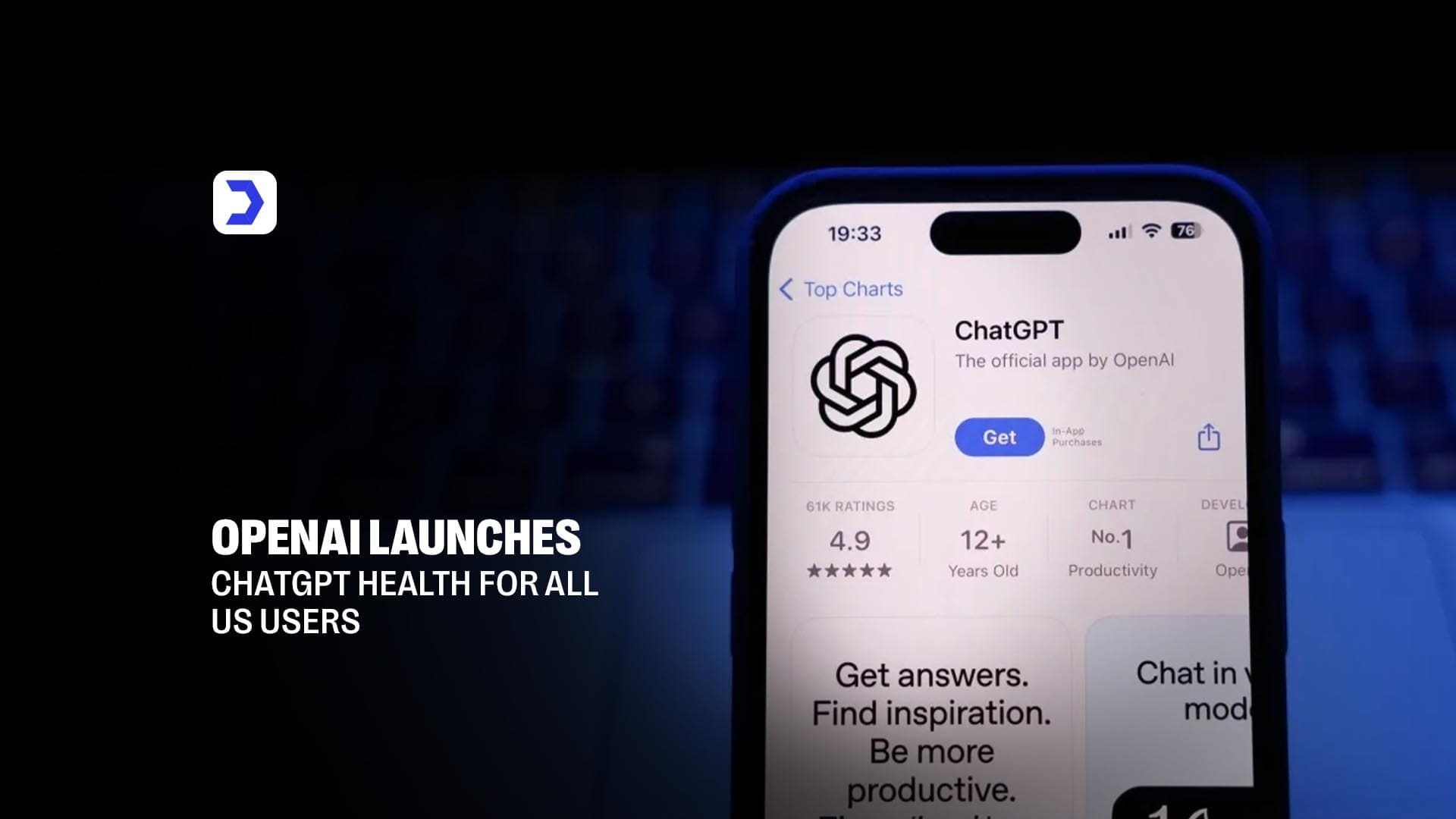
OpenAI has officially begun the nationwide rollout of ChatGPT Health, a dedicated artificial intelligence feature integrated directly into the core ChatGPT experience for adult users across the United States. Designed to bring personal context into everyday medical and wellness inquiries, the expansion enables individuals to securely connect electronic health records, diagnostic lab results, and personal fitness metrics to the platform. The capability is accessible across the Free, Go, Plus, and Pro subscription tiers on both web browsers and iOS mobile apps, representing a major effort by OpenAI to streamline how consumers access and evaluate their healthcare data.
The public launch follows an intensive pilot program initiated in January, during which health features were isolated inside a standalone hub within the platform interface. Data gathered during early testing revealed that over 70% of health discussions occurred naturally in main conversational threads rather than inside the dedicated module. Responding to this user behavior, OpenAI integrated the feature directly into default chats, letting the assistant draw upon connected medical context whenever prompted. As software platforms increasingly integrate contextual intelligence into daily digital utilities, readers following broad industry trends on digital software labs news can observe how conversational foundation models are moving from passive knowledge retrieval toward active data synthesis across consumer sector applications.
Recent figures released by OpenAI show that more than 300 million people worldwide now turn to ChatGPT each week with health-related questions. In earlier phases of deployment, that query volume stood at approximately 230 million weekly users seeking guidance on topics ranging from clarifying complex medical jargon to preparing questions for upcoming clinical visits. By connecting primary health data sources, the company aims to reduce the burden of manually copying and pasting lab values, medication schedules, or physical therapy notes into prompt boxes during every session.
Tech media outlets like TC and health policy analysts have noted that this rollout comes during a period of heightened scrutiny regarding the accuracy and safety of consumer AI tools. The company faced renewed legal pressure just hours before the announcement when a Florida lawsuit highlighted concerns over automated medical responses. In response, OpenAI emphasized that ChatGPT Health is engineered strictly as an educational companion to assist patients in understanding their records, reiterating that the software is explicitly not designed to diagnose illnesses, prescribe regimens, or substitute for professional clinical judgment.
Health conversations grounded in your information
To provide meaningful context without compromising usability, ChatGPT Health aggregates information across both consumer wellness tools and clinical provider infrastructure. On the consumer side, users on iOS devices can link Apple Health, alongside platforms such as One Medical, Function Health, and popular fitness tracker databases. On the clinical side, the integration interfaces with major electronic health record (EHR) networks, including Epic Systems and Oracle Health, allowing patient portal records from participating hospital networks to feed directly into the chat engine.
Once accounts are connected, ChatGPT can perform nuanced longitudinal analysis. For instance, if a user receives a new metabolic panel, the assistant can pull past bloodwork to contrast current liver or kidney values against historical baselines. Similarly, individuals can evaluate how sleep quality or daily step counts relate to energy fluctuations or recovery periods after exercise. Rather than requiring manual entry, users can type Health within any session to invoke their connected profile or allow the assistant to draw upon relevant details automatically when answering diet, exercise, or symptom questions.
Underneath the hood, OpenAI has paired this functional rollout with enhancements to its core reasoning models. Users on the Free tier interact with GPT-5.5 Instant, a model calibrated to recognize urgent medical situations, clarify diagnostic terms, and request missing background information before giving advice. Subscribers on paid tiers access GPT-5.6 Sol, a specialized model demonstrating superior reasoning over multi-step clinical histories and complex health records. The evolution of these specialized model variants reflects a wider movement across development teams to build autonomous workflow assistants, much like how AI coding made easier as OpenAI adds Codex agent to ChatGPT transformed software engineering by embedding automated reasoning directly into daily programming environments.
Data protection and user privacy remain pivotal concerns when handling protected health information. OpenAI has established strict guardrails to prevent sensitive patient data from leaking into public training sets. Connected medical records, Apple Health streams, and specific health conversations are fully encrypted both at rest and in transit. Crucially, OpenAI explicitly confirms that no personal health metrics or associated conversation histories will be used to train its base foundation models or serve targeted advertisements. Users maintain granular control over their connections and can disconnect individual provider accounts or wipe synced data entirely from the platform settings at any time.