Summary
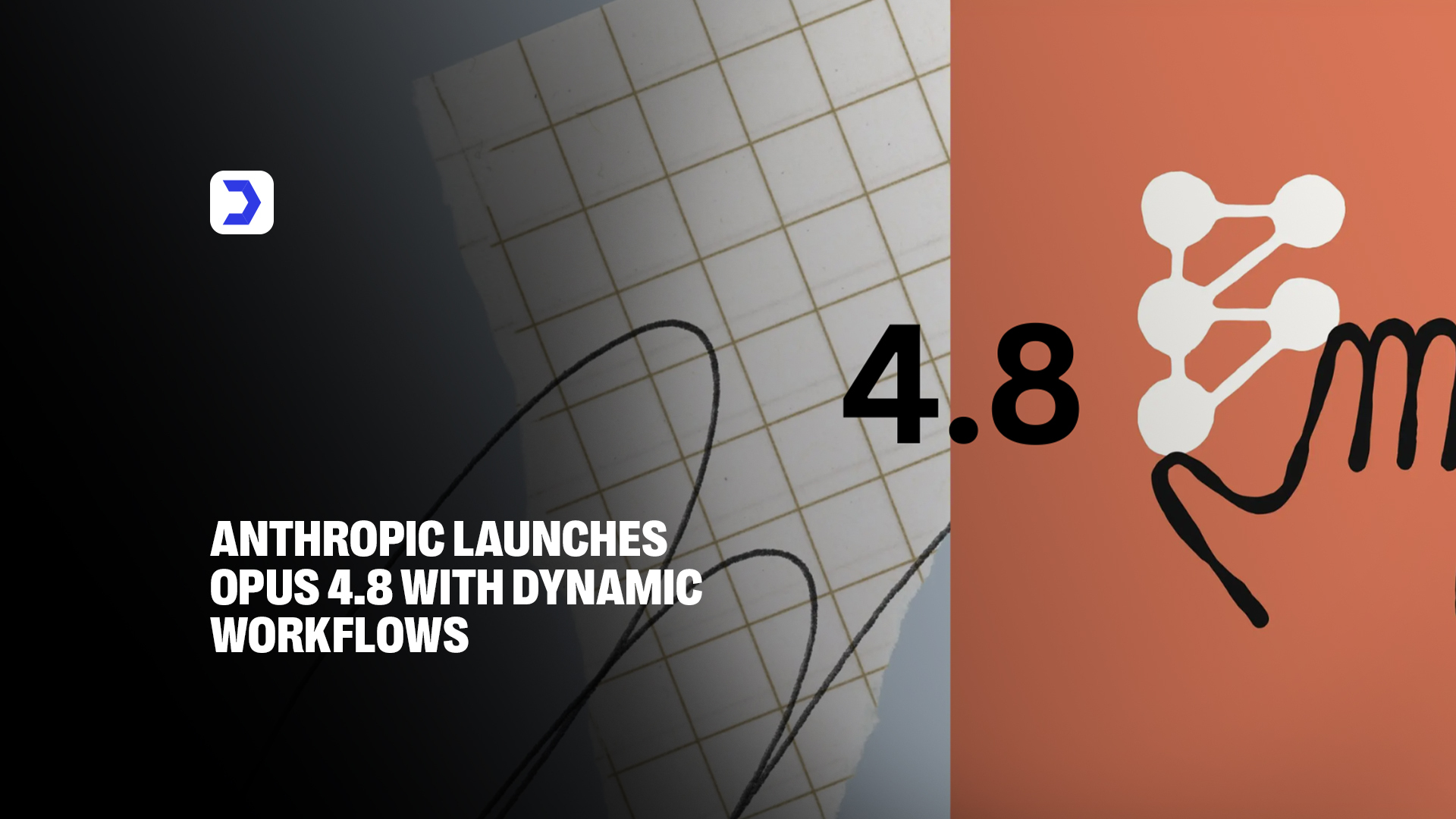
- Anthropic has introduced Opus 4.8, which features “Dynamic Workflows,” a capability allowing Claude to plan complex tasks and execute them by spinning up parallel subagents in a single session.
- By utilizing agent swarms, the system breaks large objectives into specialized subtasks that are managed simultaneously, enabling the model to handle massive projects with high precision.
- This AI update incorporates baked-in self-verification, where the system checks its own outputs for errors and iterates until results converge before reporting them to the user.
- Positioning Opus as a tool for production-grade work, the update ensures the model maintains the deep reasoning and judgment required for complex, multi-step explorations.
- The 4.8 version is available immediately for API users and on major cloud platforms, offering faster and more cost-efficient performance for high-volume tasks.
The rapid evolution of artificial intelligence continues to redefine the boundaries of what automated systems can achieve in a professional environment. With the arrival of the latest update from Anthropic, the industry shifts toward a new paradigm of operational efficiency. The introduction of Opus 4.8 represents a significant leap forward, particularly with the rollout of dynamic workflows designed to handle increasingly complex task architectures. This update marks a transition where AI becomes less of a static chatbot and more of a proactive partner in organizational success. By embracing this technology, companies can bridge the gap between initial ideation and final execution with unprecedented speed. As we track the latest industry shifts at Digital Software Labs News, it becomes clear that these advancements are setting the standard for how high-level reasoning models will function throughout the remainder of 2026 and beyond.
What dynamic workflows actually do
The core innovation within Opus 4.8 lies in the way it structures internal processes. Previously, users relied on fixed chains of thought, but dynamic workflows allow the system to adjust its strategy in real-time based on the data it receives. This capability is fundamentally tied to the emergence of agent swarms, where multiple specialized instances of the model collaborate to solve multifaceted problems simultaneously. Instead of forcing a single model to perform every step of a task, these workflows decompose complex objectives into smaller, manageable units that are then processed by the most suitable agent.
This architecture thrives on autonomy. When a task requires gathering information, writing code, and finalizing a report, the dynamic system orchestrates these steps without constant human oversight. For those following the evolution of machine transparency, understanding how these models arrive at their conclusions is vital, a topic discussed in detail regarding Anthropics’ vision for 2027. By providing a clearer look into these decision-making pathways, the integration of such workflows ensures that automation remains both powerful and predictable. This structural shift allows for a higher degree of fidelity in output, as each agent within the swarm focuses on its unique domain, leading to a level of precision that traditional monolithic models struggle to match.
Pricing and availability
Accessing the latest Claude infrastructure involves a multi-tiered approach designed to accommodate both individual developers and enterprise-grade organizations. The 4.8 update is currently available for API users, providing businesses with the opportunity to integrate these advanced workflows into their existing stacks immediately. The pricing strategy reflects the resource-intensive nature of dynamic workflows; as the model engages in more complex reasoning and multi-agent coordination, consumption metrics shift accordingly.
For teams managing high-volume requests, the transition to Opus 4.8 is a deliberate step toward optimizing long-term costs. By reducing the need for iterative manual prompts and error correction, these workflows lower the overall operational burden, effectively providing a better return on investment per task completed. Anthropic continues to provide documentation that helps organizations forecast their usage patterns, ensuring that the transition to swarm-based task processing remains financially sustainable. As availability expands to broader regions, the focus remains on maintaining high-performance tiers that allow for the scaling of AI-driven projects without latency or degradation in reasoning quality.
The competitive landscape is getting interesting
The release of 4.8 places additional pressure on the rest of the sector, particularly as major players intensify their focus on safety and organizational methodology. The industry is currently witnessing a period of intense scrutiny regarding how different labs manage their development practices. Conversations regarding OpenAI and Anthropic sounding the alarm over xAI’s safety culture highlight the growing tension between rapid innovation and the necessity of maintaining rigorous ethical standards. These discussions are not merely peripheral; they influence the trajectory of model development and the level of public trust in autonomous systems.
As Anthropic pushes the envelope with agent swarms, the broader marketplace must adapt to a standard where performance is measured by the ability to manage complexity rather than just raw processing power. Competitors are now scrambling to refine their own orchestration layers to offer similar dynamic capabilities. This creates a challenging environment for users who must evaluate which platform provides the best balance of reasoning capability, ethical oversight, and workflow efficiency. The differentiation between models is no longer just about the training data or the parameter count, but rather the intelligence of the system in managing its own limitations and adapting its operational framework on the fly. This competition is ultimately beneficial for the user, as it forces the entire ecosystem to prioritize more reliable, autonomous, and transparent AI architectures.