Summary
- OpenAI secured a historic $122 billion in a single Fundraising cycle.
- A dedicated $3 billion tranche was successfully raised from individual retail investors.
- The deal pushes OpenAI’s post-money valuation to an unprecedented $852 billion.
- Massive contributions were led by Softbank, Nvidia, and Amazon to secure the AI supply chain.
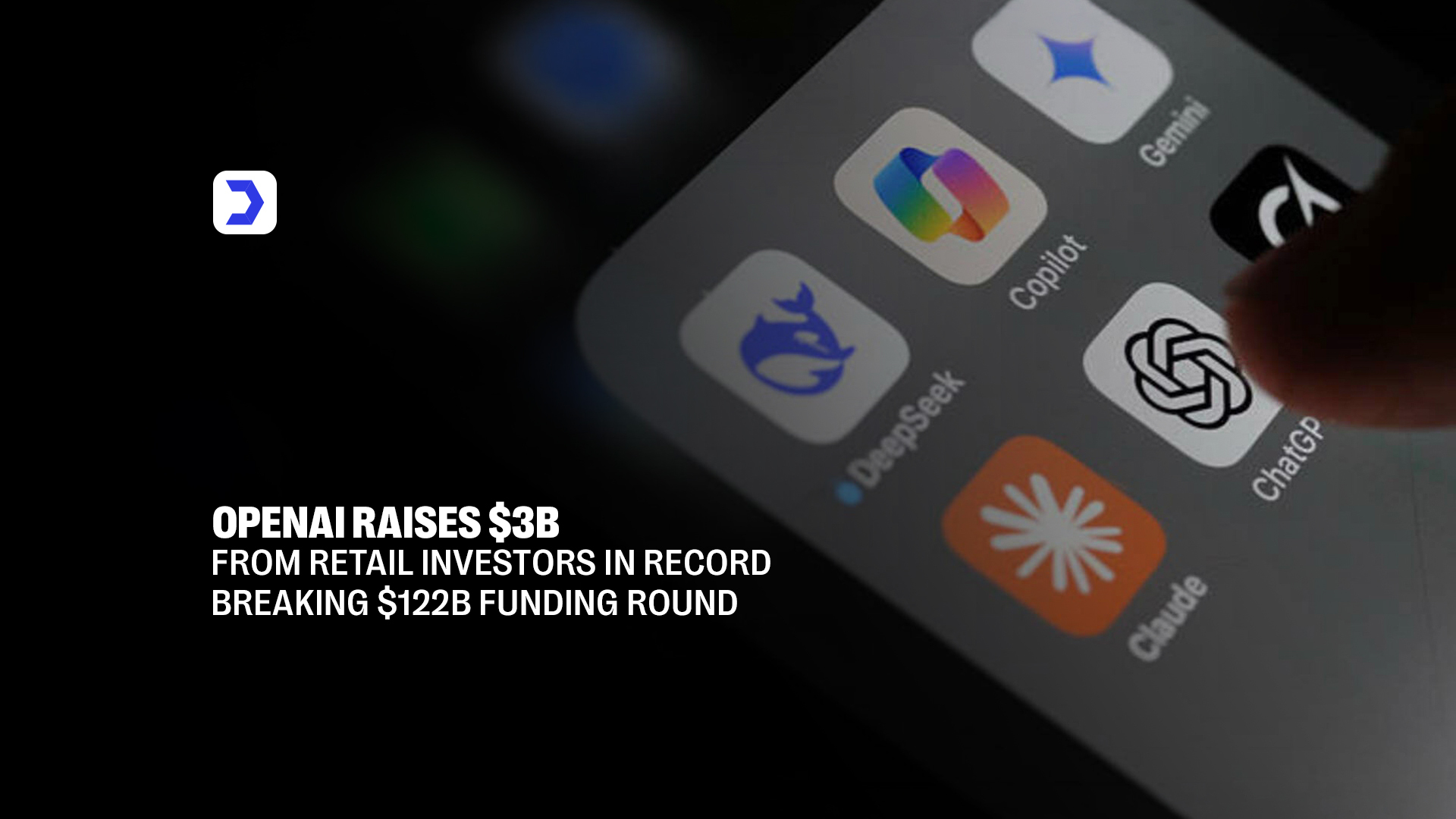
The global financial landscape witnessed a seismic shift this week as OpenAI finalized a monumental capital injection that redefines the boundaries of private market valuation. In a move that signals the transition of artificial intelligence from a speculative venture to the foundational infrastructure of the modern world, the company has successfully closed a record-breaking $122 billion funding cycle. While the involvement of institutional titans was expected, the inclusion of a $3 billion tranche specifically carved out for retail investors has captured the public’s imagination, marking a rare moment where individual participants could gain entry into a pre-IPO entity of this magnitude. This massive openai fundraise brings the company’s post-money valuation to an unprecedented $852 billion, placing it in a league of its own among private technology firms.
The complexity of this Fundraising round reflects the evolving needs of the industry as the computational costs for training frontier models skyrocket. OpenAI has shifted its strategy to build a “capital moat,” effectively insulating itself from the volatility of the venture capital market to ensure its research and development can continue unhindered for the next decade. As the industry matures, the latest insights from Digital Software Labs News suggest that this influx of capital is being directed toward a total vertical integration of the AI stack, moving from simple application layers to the ownership of the physical hardware and energy sources that power them.
The participation of Softbank marks a pivotal moment for Masayoshi Son, who has pivoted his entire investment thesis toward the “Singularity,” committing $30 billion to integrate OpenAI’s technology into a vast web of robotics and automation companies worldwide. Similarly, the presence of Andreessen Horowitz ensures that the company remains grounded in a “techno-optimist” philosophy, providing the governance expertise required to navigate the transition from a research-heavy lab to a global software utility. This technical dominance, supported by the new $122 billion war chest, allows OpenAI to out-scale competitors, a move clearly seen when OpenAI responds to Google with GPT-5.2 after the Code Red memo to demonstrate that legacy rivals would not slow its pace of innovation.
The $3 billion retail portion of the round is perhaps the most socially significant aspect of the deal, as the most lucrative growth phases of tech giants have historically happened behind closed doors. By allowing retail investors to participate in this openai fundraise, the company is attempting to build a broader base of public support that serves as a hedge against future regulatory scrutiny. Ultimately, the successful closure of this $122 billion round sets a new benchmark for the technology sector, proving that with the backing of Softbank and Andreessen Horowitz, OpenAI is no longer just a participant in the AI revolution; it is the engine driving it.