Summary
- Sam Altman pushed back against public concerns about AI’s energy usage, noting that many widely shared figures do not reflect how modern systems actually operate.
- He explained that newer data centers use more efficient cooling methods, reducing the environmental strain often associated with large-scale AI infrastructure.
- Altman acknowledged that energy demand will keep rising as AI expands, reinforcing the importance of shifting toward stronger renewable energy sources.
- His comparison between the energy used to train AI models and the energy required for human learning sparked debate about the fairness of such analogies.
- The discussion reflects a broader industry challenge: balancing rapid AI innovation with sustainable resource management and responsible long-term planning.
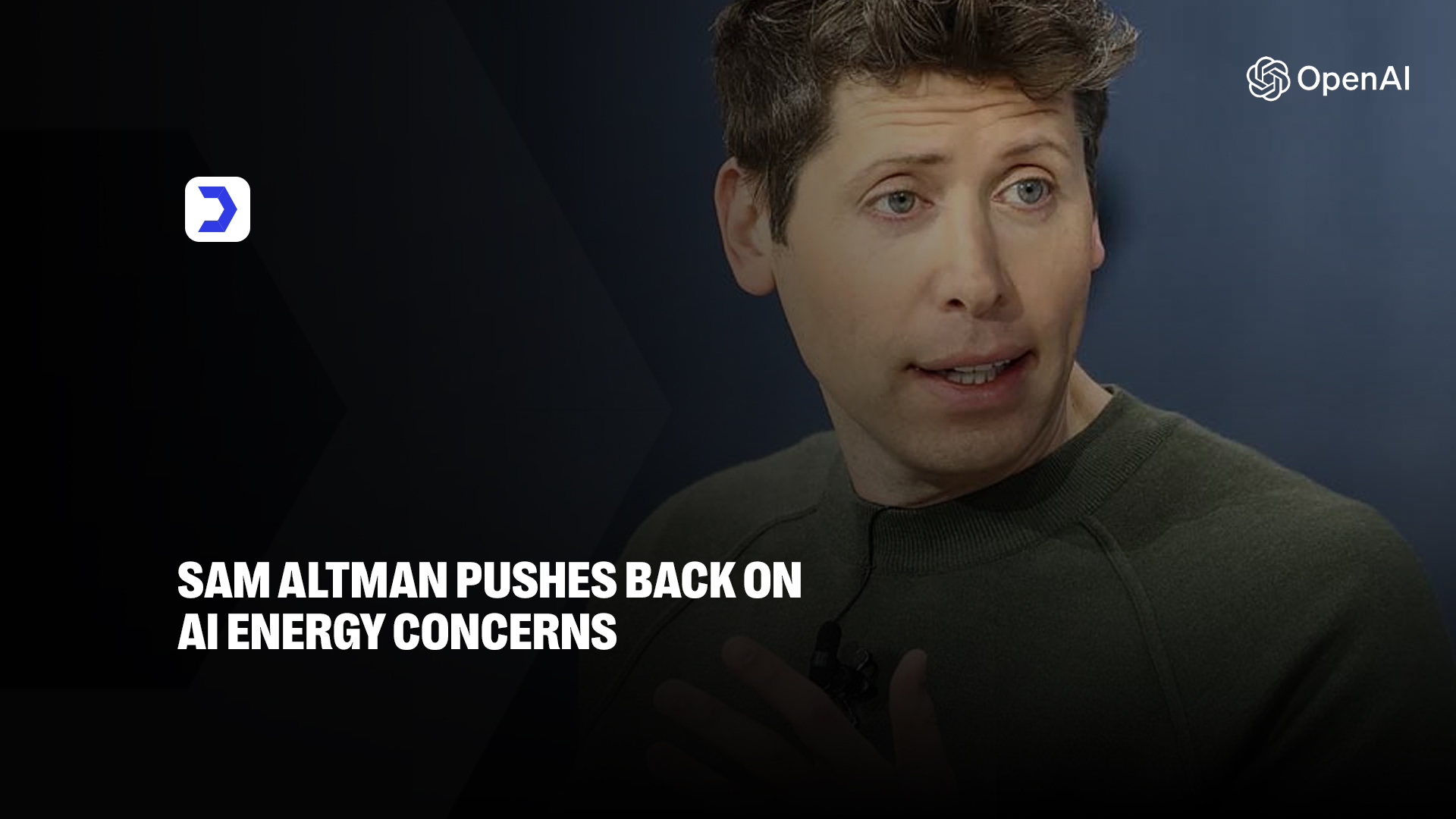
The global dialogue surrounding the environmental footprint of artificial intelligence has reached a fever pitch, but Sam Altman is not standing idly by as critics label the technology an ecological disaster. As the head of OpenAI, Altman spent the early months of 2026 addressing mounting anxiety regarding the electricity and water required to sustain massive data centers. During recent public appearances, most notably at the India AI Impact Summit in New Delhi, the CEO Sam Altman took the opportunity to remind the world that progress always requires resources and that the narrative of AI being uniquely wasteful is disconnected from modern engineering reality.
Altman’s defense comes at a critical juncture for the industry. With infrastructure investment commitments exceeding $200 billion in regions like India, the physical reality of the “cloud” is becoming impossible to ignore. However, Altman argues that many viral claims—such as the idea that a single ChatGPT query consumes 17 gallons of water—are “totally insane.” He posits that while total energy consumption is a legitimate concern, the efficiency of these models is often vastly understated. This commitment to long-term vision over immediate optics is a hallmark of his leadership, similar to how Sam Altman refuses to discuss revenue figures to keep the public focus on research breakthroughs rather than the short-term financial noise of the tech sector.
Sam Altman on the True Cost of Human Intelligence
One of the most provocative arguments leveled by Sam Altman involves a direct comparison between the training of a large language model and the development of a human being. During a session at the Express Adda event, he noted that critics often focus on the massive electricity spikes during a model’s training phase while ignoring the decades of resources required to produce a functional human intellect. He pointed out that it takes roughly 20 years of life, along with all the food and water consumed during that time, before a human becomes “smart” enough to provide complex answers.
This perspective shifts the debate from raw numbers to relative efficiency. Altman suggests that OpenAI’s models are already catching up or have even surpassed humans on an energy-efficiency basis per query once the “training” period is accounted for. This bold stance aligns with his previous assertions that the current trajectory of innovation will eventually outpace human limitations in every scientific field. Indeed, Sam Altman predicts OpenAI will have a leading AI researcher by 2028, a milestone that would suggest the energy invested in silicon is yielding a far higher intellectual return than traditional biological methods.
Internet criticises Sam Altman
While the “20 years of food” analogy was intended to contextualize resource use, it has sparked a firestorm of criticism across social media. High-profile figures, including Zoho founder Sridhar Vembu, have publicly pushed back, stating that technology should never be equated to human life in a balance sheet of calories and kilowatts. Critics argue that Altman’s worldview is “reductive,” treating human growth as a mere “inefficient meat computer” that needs to be optimized or replaced.
The internet’s backlash isn’t just about philosophy; it’s about the tangible impact on local communities facing rising electricity prices and water stress. Despite the skepticism, Sam Altman remains a sam altman partner to the global energy transition, frequently advocating for the rapid adoption of solar and nuclear power to meet the total demand of the AI era. This pragmatism is consistent with his broader philosophy of independence and technical resilience; for instance, Sam Altman rejects government assistance for OpenAI in case of failure, preferring that the company stands on its own merits rather than relying on state-funded safety nets during its aggressive expansion.