Summary
- Elon Musk is exploring orbital data centers to expand global AI infrastructure capacity.
- Space-based infrastructure may reduce environmental strain and diversify energy sources.
- Significant technical, regulatory, and financial challenges remain unresolved.
- If realized, orbital computing could redefine AI competition and global digital strategy.
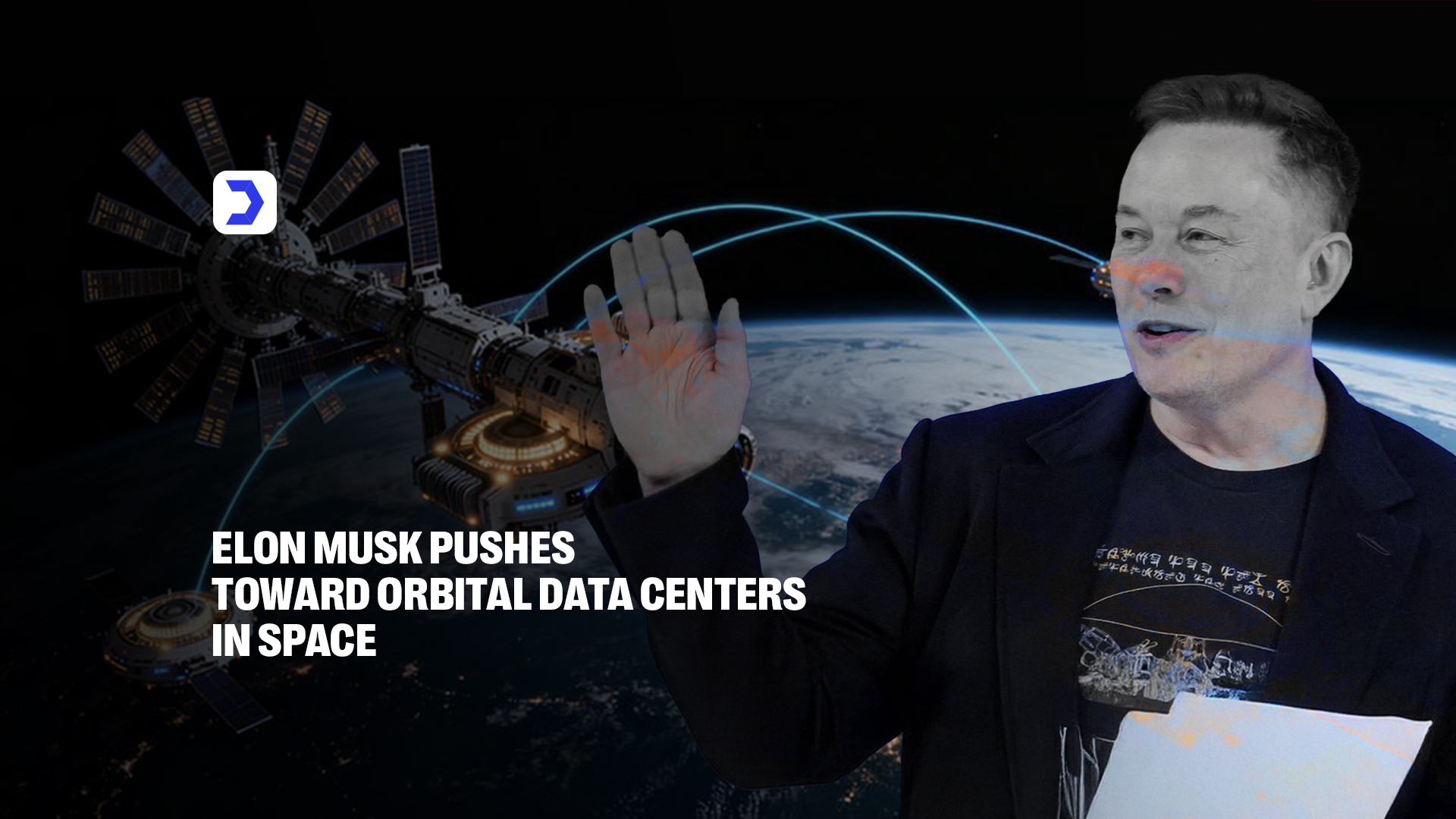
The accelerating expansion of AI infrastructure is reshaping how global technology leaders approach long-term computing capacity. Amid this shift, Elon Musk is reportedly advancing discussions around deploying orbital data centers, positioning space as the next frontier for digital infrastructure. The concept reflects growing pressure on terrestrial computing facilities that struggle with land constraints, rising electricity consumption, and environmental scrutiny. As artificial intelligence models increase in scale and complexity, the demand for high-density processing clusters has begun exceeding what many traditional data centers can sustainably provide.
The idea of placing modular computing stations in low Earth orbit may appear ambitious, yet it aligns with Musk’s broader ecosystem that connects space exploration and advanced AI development. Orbital facilities could operate primarily through direct solar energy collection, potentially lowering reliance on ground-based power grids. This structure may reduce cooling limitations that typically challenge terrestrial infrastructure, where overheating and water-intensive cooling systems increase operational costs. By removing gravity-based constraints and environmental stressors, space-based facilities might enable more stable and efficient computing environments for next-generation AI systems.
Recent safety debates within the AI sector, including concerns referenced in OpenAI and Anthropic Sound Alarm Over xAI’s Safety Culture, highlight the competitive intensity surrounding AI development. Control over computing infrastructure has become as strategically important as algorithmic innovation. Orbital data centers, if viable, would not simply expand capacity but potentially shift where and how AI dominance is established.
Why it matters
The global race to expand AI infrastructure has intensified as governments and corporations compete for digital leadership. Large-scale data centers now consume significant portions of regional electricity output, raising sustainability concerns and increasing scrutiny from regulators. Shifting portions of digital infrastructure into orbit could theoretically distribute risk while alleviating environmental strain on land-based facilities.
Broader developments in technology strategy and digital transformation trends can be followed through updates published at Digital Software Labs. Analysts suggest that orbital computing, while long-term in scope, signals a shift in how tech leaders conceptualize scalable infrastructure.
The geopolitical implications are equally significant. Nations investing heavily in AI research may interpret orbital data centers as strategic assets. Dominance in space-based AI infrastructure could provide not only technological leverage but also symbolic leadership in next-generation computing systems.
Business impact
For corporations operating large AI models, orbital facilities introduce both potential efficiencies and financial uncertainty. Constructing space-based data centers would demand collaboration between aerospace firms, AI developers, and energy engineers. Capital investment would be immense, but control over independent infrastructure might create competitive insulation from energy volatility and regulatory pressures.
Companies already face rising operational expenses due to expanding AI training requirements. Massive AI infrastructure clusters require advanced processors, energy-dense facilities, and redundant networking systems. If orbital environments reduce thermal constraints and offer uninterrupted solar input, long-term cost structures could stabilize. However, compliance with international space law, liability agreements, and satellite governance frameworks would shape feasibility timelines.
Parallel experimentation in AI deployment strategies, including initiatives described in X Experiments with AI Chatbots to Write Community Notes, underscores how rapidly digital ecosystems are evolving. These shifts indicate that control over scalable computing environments may become central to corporate competitiveness.
Ongoing coverage of AI industry trends available at Digital Software Labs News suggests that investment in resilient infrastructure increasingly intersects with national policy and global market positioning. Orbital data centers, if operationalized, could transform supply chains, reshape cloud service economics, and generate entirely new aerospace service industries. While commercialization remains distant, the strategic implications are already influencing conversations across technology and finance sectors.