Summary
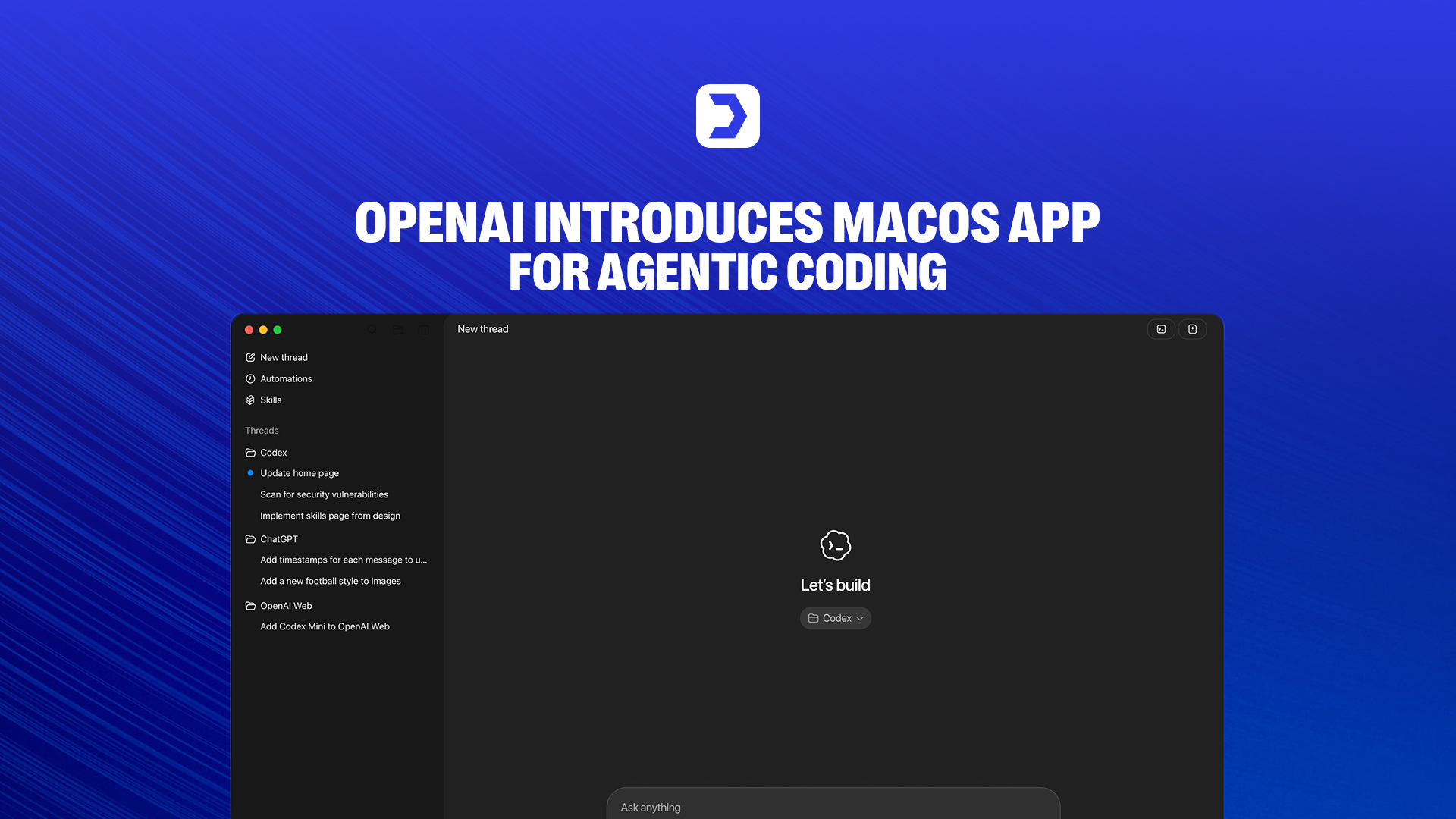
- OpenAI has launched a new macOS app for agentic coding, utilizing the Codex AI model to assist in writing and improving code.
- The app enhances developer workflows by allowing AI to autonomously generate, debug, and refine code across multiple programming languages.
- It follows OpenAI’s response to competition in the AI landscape, including the release of GPT‑5.2 after internal concerns.
- Codex facilitates collaboration between developers and AI, enabling more efficient and error-free code generation.
- The app is tailored for macOS, ensuring seamless integration and optimized performance for developers working within the Apple ecosystem.
- As demand increases for developers familiar with AI-driven tools, opportunities are rising for professionals skilled in AI app development.
- Digital Software Labs news highlights the growing trend of AI‑assisted coding and the need for skilled talent to manage AI‑enhanced workflows in development teams.
OpenAI has launched a dedicated macOS app that brings agentic coding directly to developers’ desktops, giving the powerful Codex model a native environment where it can act autonomously on coding tasks. Unlike traditional assistants that respond only to direct prompts, this OpenAI powered coding app can generate, correct, and refine code with minimal input. For developers and teams focused on reliability, the release comes amid broader industry debate about AI behavior, including concerns raised about unpredictable outputs in the broader AI landscape, such as AGS warning Microsoft, OpenAI, and Google over delusional AI outputs.
With this macOS release, Codex OpenAI joins the ranks of essential AI tools designed to streamline development workflows. The app blends an intuitive interface with the depth of the AI app infrastructure, enabling code generation, debugging suggestions, and interactive coding sessions without leaving the desktop environment. It marks a significant step in making agentic coding more accessible to everyday developers.
Developers on macOS will find that the new app adapts naturally to local systems, with fast performance and built‑in support for common languages like Python, JavaScript, and Go. By making agentic coding a part of the native toolset, OpenAI is setting a new benchmark for how AI can participate in software creation without cumbersome setup or cloud‑only restrictions.
The codex‑powered app supports collaborative coding as well, enabling teams to review AI suggestions, refine generated code, and maintain quality control. This approach capitalizes on Codex’s deep contextual understanding while giving developers the final say in implementation. With AI tools evolving rapidly, this coding app creates a new baseline for how machine intelligence participates in software development.
New order
A new era in coding app ecosystems is emerging as OpenAI continues to push boundaries in AI‑assisted development. The macOS app for agentic coding introduces a fresh workflow where AI actively participates in writing and improving code, redefining how developers structure projects and manage tasks. This shift follows OpenAI’s recent response to increasing competition in the field, including their release of GPT‑5.2 after addressing concerns raised during a Code Red scenario within the company. OpenAI’s moves signify a growing recognition of AI’s evolving role in software development.
Developers can now work with Codex openai more organically on macOS, blending AI suggestions with human oversight. With the app’s intuitive interface, building software becomes a cooperative process where AI accelerates routine tasks and helps eliminate errors. This new ordering of roles between coder and machine brings increased efficiency without sacrificing control, offering a preview of how future OpenAI tools might operate across environments.
Anyone hiring?
Questions about opportunities are rising as demand grows for developers who can work with modern AI app tools like the new macOS Codex app. Companies are increasingly seeking talent that understands both traditional programming and how to collaborate with AI in real‑world projects. Those familiar with agentic coding and platforms powered by Codex OpenAI are finding that their skills are opening doors, especially in teams that value efficiency and innovation.
Reports from Digital Software Labs news reflect broader industry trends in recruitment, where knowledge of AI‑assisted development can distinguish a candidate from the competition. Employers are looking for engineers who can integrate AI suggestions into production‑ready code, troubleshoot AI‑generated segments, and maintain secure, robust systems in environments augmented by tools like OpenAI’s offerings. In this evolving landscape, developers who embrace AI‑centric workflows may have an edge in securing roles at forward‑thinking organizations.