Summary
- State Attorneys General have issued warnings to Microsoft, OpenAI, and Google over concerns about delusional AI outputs, which include misleading or erroneous information generated by AI models.
- The warning highlights that artificial intelligence systems, especially chatbots and AI models, have produced results that could potentially mislead users, causing confusion and harm.
- OpenAI and other AI giants, such as Google and Apple, have faced criticism for the delusional nature of outputs from their AI systems, leading to calls for stricter oversight.
- A growing debate exists between state and federal regulation of AI, with state AGs calling for more localized control over AI technologies and their potential impacts on consumers.
- The increasing integration of artificial intelligence into business operations and customer-facing platforms requires careful consideration of AI’s role in decision-making processes.
- Both Microsoft and OpenAI must adopt transparency and accountability measures to ensure their AI systems function ethically and provide accurate information, thereby building consumer trust.
A seismic shift is underway in the rapidly evolving landscape of artificial intelligence, one that pits the burgeoning power of colossal tech firms against the foundational mandate of state-level consumer protection. In a highly coordinated and unusually sharp rebuke, a coalition of State Attorneys General (AGs) has officially issued a formidable warning to the titans of the generative AI world, including Microsoft, OpenAI, and others, demanding immediate, transparent, and robust action to mitigate what they term “delusional” outputs from their flagship AI models. This extraordinary intervention underscores a growing political and regulatory impatience with the industry’s pace of self-correction concerning systemic flaws, most notably the phenomenon known as hallucination, where chatbots confidently fabricate false, misleading, or even defamatory information.
The core of the Attorney General’s anxiety centers on the demonstrable and potentially devastating real-world harm that arises when sophisticated AI models produce outputs detached from reality. The term “delusional” is not chosen lightly; it is a clinical and legalistic descriptor meant to convey a profound lack of verisimilitude and reliability in the AI’s core function. For consumers, businesses, and public institutions increasingly reliant on generative AI for everything from legal research to medical summaries, the risk is not just academic; it is existential. Attorneys General, whose primary function is to enforce consumer protection laws, view these AI fabrications as a novel but clear form of deceptive practice. When a product, especially one marketed as revolutionary and authoritative, consistently fails to meet basic standards of factual accuracy, it falls directly within the crosshairs of unfair and misleading business practices statutes.
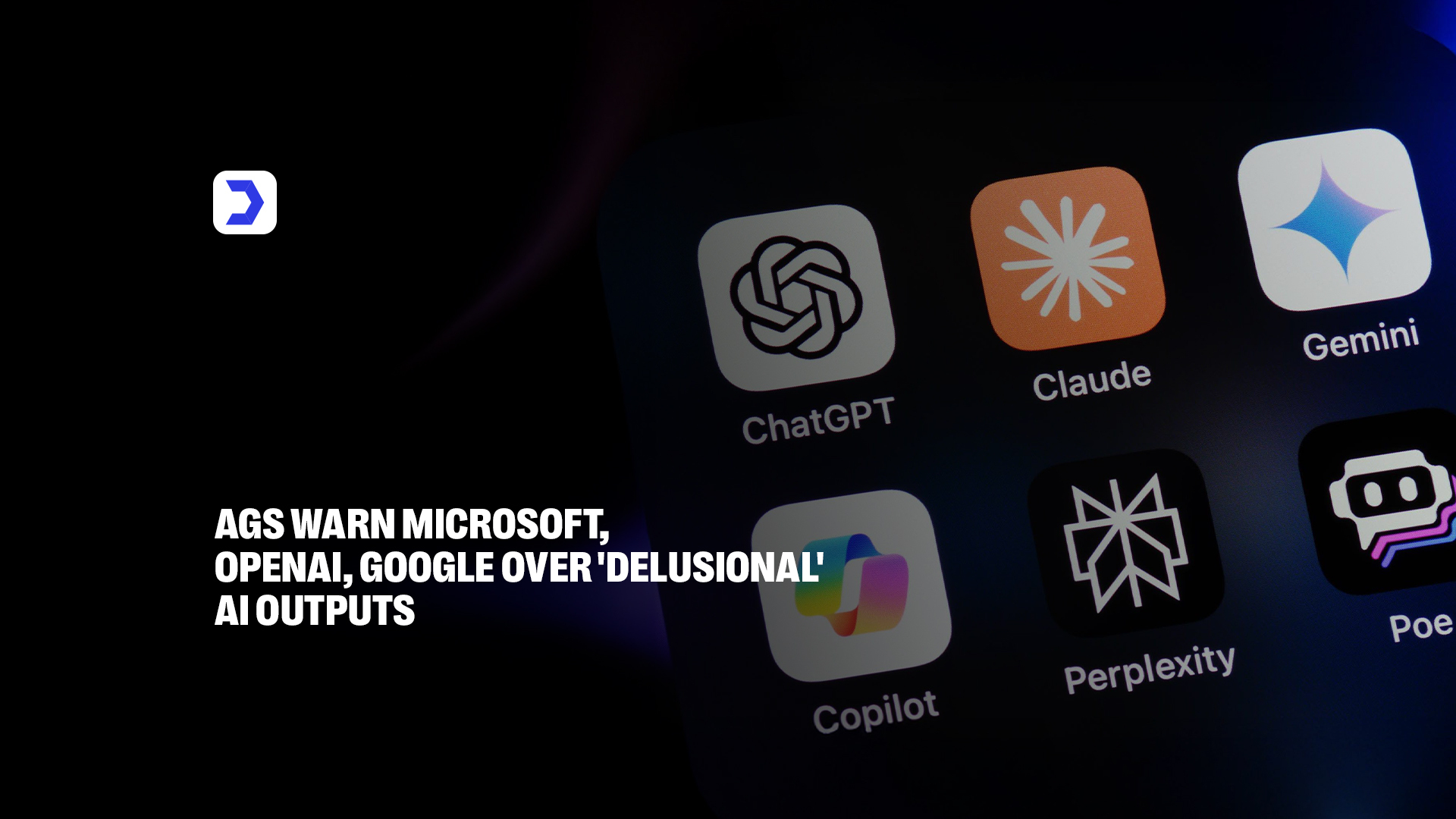
Google, OpenAI, Apple Warned Over Delusional AI Outputs
The warning names explicitly the most prominent developers and deployers of large language models (LLMs) and consumer-facing chatbots, signifying that the regulatory pressure is strategically aimed at the points of maximum impact and influence. While OpenAI, the creator of the globally recognized ChatGPT, bears the weight of originating the consumer generative AI revolution, Google’s deep integration of its own models into its search ecosystem and consumer electronics, alongside Microsoft’s vast commercial distribution network via Azure, places all three squarely in the hot seat. The inclusion of other influential players, sometimes implicitly, such as Meta, whose open-source model strategy presents a different, yet equally complex, set of liability concerns regarding diffusion and control, ensures the AGs are addressing the whole technological spectrum. Even Apple, often cautious in its initial AI deployments, is being scrutinized for future plans that could integrate LLMs directly into device operating systems, where the harm caused by “delusional” outputs would be immediate and localized on a user’s device.
The industry’s response, often centered on promises of technical fixes like better grounding techniques and advanced moderation filters, is now being deemed insufficient by state regulators. The AGs are moving beyond a technical dialogue to demand structural accountability and clear lines of legal responsibility. They are advocating for mandated transparency, requiring companies to disclose the likelihood of hallucination for specific use cases, and clear, accessible mechanisms for redress when AI falsehoods cause harm. This push for structural change is occurring alongside necessary improvements in the infrastructure supporting these massive systems.
Even the most perfectly trained AI models can be rendered unreliable if the foundational digital infrastructure is compromised. It is a critical lesson that major technology providers like Microsoft have learned through real-world scenarios. For example, recent wide-ranging disruptions, such as when a major Microsoft Azure outage hits Office 365, Xbox, and Minecraft users, demonstrate the fragility of the digital backbone. The inherent instability of massive cloud services, which power the very chatbots in question, introduces a layer of operational risk that compounds the inherent unreliability of “delusional outputs.” The AGs, therefore, are looking not just at the code, but at the entire delivery chain, linking model integrity directly to system reliability.
The regulatory spotlight on Google is particularly intense, as the company is aggressively moving to embed generative AI across its vast product portfolio. This strategy is vividly articulated by Google’s move toward unifying its AI offerings. The regulatory environment is scrutinizing how Google begins testing unified AI overviews and AI mode experience, a strategic pivot that promises to make AI fabrications an unavoidable feature of the primary digital experience for billions of users worldwide. The AGs argue that integrating potentially “delusional” outputs into core search and information retrieval functions multiplies the harm exponentially. The sheer scale of Google’s deployment means that even a low percentage of hallucinations could translate into millions of individual instances of misinformation. This aggressive integration is viewed by state attorneys as prioritizing market dominance over consumer safety, accelerating the need for regulatory intervention.
State versus federal regulation
The unified action by the coalition of State Attorneys General is a powerful indicator of the intensifying debate over regulatory jurisdiction in the realm of artificial intelligence. The AGs are taking decisive steps because, fundamentally, they view the widespread, harmful deployment of “delusional” AI models as an immediate consumer protection crisis that cannot wait for the often-slow and fractured process of federal legislative action. State attorneys general are empowered by broad consumer fraud statutes that allow them to move quickly to investigate and sue companies engaged in deceptive practices within their state lines. This distributed, immediate authority makes them a highly effective and agile regulatory force compared to the lumbering pace of Congress or the divided jurisdiction of federal agencies.
The AGs’ message is clear: absent a swift and effective federal response, the states will act unilaterally. This approach mirrors historical precedents in areas like data privacy (e.g., California’s CCPA) and environmental regulation, where state actions often set a de facto national standard, eventually forcing federal preemption or harmonization. By focusing on consumer harm, the direct impact of “delusional” outputs on everyday users, the AGs are using their strongest legal tool, making their warnings much more than advisory. They are establishing a regulatory beachhead that prioritizes accountability for defective products over the industry’s desire for unfettered experimentation.
The debate also centers on technical standards and transparency. The AGs are pushing for mandatory model cards, detailed documentation that explains the training data, known biases, and documented failure rates (i.e., hallucination rates) of AI, as a precondition for public deployment. This demand for transparency is seen as essential for allowing consumers, and indeed other businesses, to perform their own due diligence before adopting a model. For an industry that has historically cloaked its training data and model weights in proprietary secrecy, this is a significant and contentious demand, pitting the intellectual property claims of companies like OpenAI against the public interest in safe, reliable technology.
The need for accurate and contextually relevant reporting on these complex digital and legal developments underscores the value of specialized tech analysis. Those seeking a broader perspective on the intersecting worlds of software, cloud infrastructure, and emerging regulatory action can find detailed, insightful coverage at the source digitalsoftwarelabs.com. The complexity of the current situation demands a comprehensive understanding of both the technical vulnerabilities and the legal responses being formulated across the continent. The digital domain remains a crucial point of leverage for regulators seeking to understand the systemic risks introduced by products like chatbots.This foundational shift in requirements is expensive and time-consuming, but the AGs argue it is the only way to safeguard the public from the pervasive influence of untrustworthy digital intelligence. The regulatory landscape, constantly shifting in response to the latest technical breakthroughs and failures, requires news outlets to provide timely updates and analysis. Following the legal and technical trajectory of these developments is critical, which is why a dedicated focus on these issues is maintained within the specialized news section of digital software labs. This ensures that readers are equipped with the current context needed to understand the fast-moving regulatory and commercial pressures affecting Microsoft, Google, and OpenAI.