Summary
- Tavus AI Santa has captivated users by offering personalized, emotionally engaging conversations, creating a unique bond that keeps users returning for hours of interaction daily.
- By using advanced AI algorithms, Tavus AI Santa adapts to users’ preferences and emotional cues, making each conversation feel authentic and human-like, resulting in longer interactions.
- The rise of AI chatbots like Tavus demonstrates the growing role of conversational AI in entertainment, transforming passive content consumption into interactive, engaging experiences.
- AI chatbots showcase the power of generative AI to create dynamic, personalized content that evolves based on user input and interaction.
- As AI chatbots continue to evolve, they will play a significant role in shaping the future of personalized entertainment, allowing users to engage with virtual characters and customize their experiences.
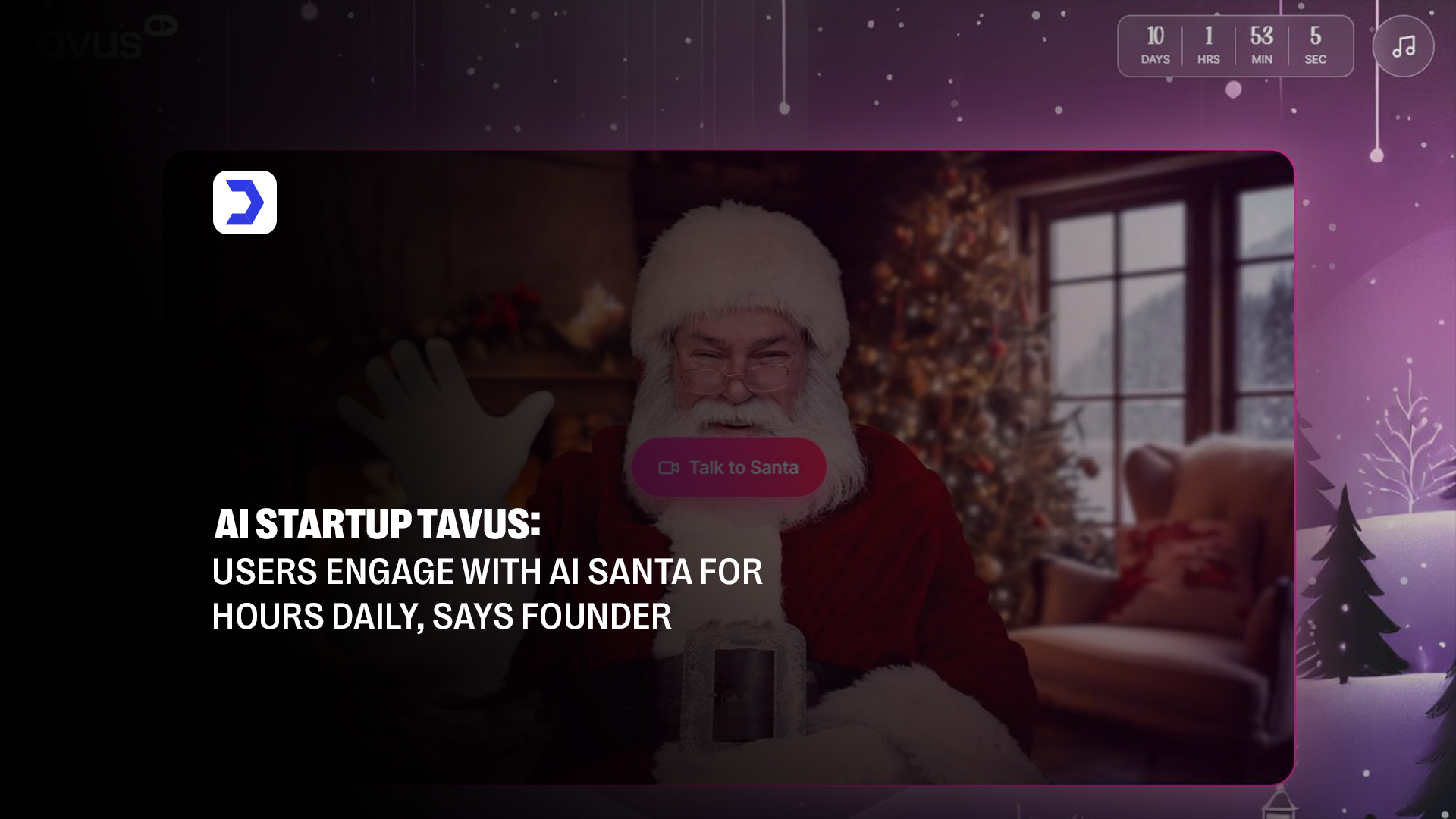
In the world of artificial intelligence, conversational chatbots are becoming more advanced, interactive, and engaging. Tavus, a rising AI startup, has captured significant attention with its innovative AI Santa. The AI-powered Santa has taken the holiday season by storm, with users engaging in lengthy conversations for hours each day. According to the founder of Tavus, this extraordinary level of user interaction highlights the evolving potential of AI in entertainment. But what makes Tavus AI Santa so captivating, and why do users return time and again for an AI-driven experience?
Tavus AI Santa is a prime example of how AI can seamlessly blend personalized interactions with the warmth of human-like conversation. Unlike traditional chatbots that often provide transactional or limited responses, Tavus has designed an AI that resonates emotionally with users. By utilizing machine learning models that adapt to each interaction, Tavus has ensured that AI Santa doesn’t just respond; it builds rapport, remembers past conversations, and provides tailored experiences that users find both comforting and engaging.
Users can engage with AI Santa on a variety of topics, from holiday wishes to personal stories. Each interaction is designed to feel as natural as conversing with a close friend or family member. This emotional depth is achieved by leveraging advanced AI models that recognize and respond to a range of human emotions, creating a more immersive and satisfying experience. This level of engagement isn’t just about entertainment; it taps into the human desire for connection, especially during the holiday season.
AI Santa’s success doesn’t stop at conversation alone. The AI is also designed for scalability, able to handle a large number of simultaneous interactions without losing the personal touch. This is a testament to Tavus’s ability to scale personalized experiences, creating meaningful interactions that feel uniquely tailored to each user. It’s a bold step toward transforming how AI is integrated into entertainment, making it an essential tool for businesses and individuals looking to offer more than just a functional AI experience.
The key to Tavus AI Santa’s appeal lies in the sophisticated blend of technology and personalization. This approach is not unlike what is being explored in other sectors of AI, such as creative writing and content generation, where tools like Shortly AI are pushing boundaries to provide users with personalized and creative content. Similarly, just as Shortly AI tailors written content to individual preferences, Tavus’ AI Santa adapts to conversations, building a personalized and immersive user experience. This integration of adaptive learning and human-like interaction is opening up new possibilities for AI in both entertainment and beyond, demonstrating the vast potential of AI-driven engagement.
As AI technology evolves, Tavus is setting a new standard for what interactive AI can achieve. The company’s success with AI Santa is just the beginning of a trend that could redefine entertainment experiences. From virtual assistants that engage users in meaningful conversations to AI characters that feel real and relatable, the future of AI is increasingly focused on creating emotional connections. The impact of Tavus’ AI Santa shows that entertainment powered by AI is not just about innovation, it’s about building relationships that leave a lasting impression on users.
For companies looking to explore similar interactive AI experiences, the lessons from Tavus’ approach are clear. Combining emotional intelligence with scalable technology can result in AI-driven experiences that go beyond functionality. The demand for such AI-powered engagement is growing rapidly, offering new avenues for businesses to connect with users in a more profound and lasting way.
The Magic Behind Tavus AI Santa’s Endless Appeal
The magic behind Tavus AI Santa’s success lies in the fusion of cutting-edge AI technology and emotionally intelligent conversation. Unlike traditional chatbots, Tavus AI Santa adapts its responses based on ongoing interactions, creating a personalized and engaging experience. This deep learning model allows the AI to remember details from past conversations, making each new interaction feel like a continuation rather than a fresh start.
As the AI learns from each user’s input, it tailors its responses, building rapport and creating a sense of familiarity that encourages long, meaningful conversations. This personalization is key to the AI’s success, as it goes beyond providing generic responses to offering an experience that feels human-like and emotionally resonant.
Tavus AI Santa doesn’t simply chat; it connects, entertains, and even comforts users. By leveraging sophisticated machine learning models, the AI creates a relationship with users, responding to their moods and adapting its tone, style, and engagement level to fit the context of each conversation. It’s this level of emotional intelligence that keeps users coming back, making Tavus AI Santa more than just a holiday gimmick; it becomes a virtual companion.
As AI technology evolves, experiences like Tavus AI Santa will continue to redefine how we interact with machines. Much like how Pika Labs AI is changing the way we approach AI-driven content creation, Tavus showcases how artificial intelligence can engage users on a deeper, more personal level, paving the way for future advancements in AI-driven entertainment.
The Future of AI Chatbots in Entertainment
The future of entertainment is being reshaped by the increasing integration of AI chatbots that offer users more than just functional interactions; they provide emotional engagement and personalized experiences. AI chatbots, like Tavus AI Santa, are opening the door to a new era where virtual companions can interact, entertain, and even build relationships with users. These developments are driving the entertainment industry towards a future where AI becomes a central character, blurring the lines between human and machine.
As AI continues to evolve, chatbots are becoming capable of creating dynamic and personalized experiences in real-time. No longer confined to answering questions or completing tasks, AI chatbots are now expected to respond with empathy, adapt their tone, and create meaningful interactions that keep users coming back. This shift marks a major step in transforming entertainment, where users not only consume content but actively engage with it, making their experiences more immersive and participatory.
The role of AI in entertainment will only expand as more platforms adopt these technologies. Virtual characters powered by advanced AI will soon interact with users in video games, online shows, and social media platforms, offering personalized storylines, responding to user choices, and enhancing the overall engagement. This opens up exciting possibilities for creating tailored entertainment that evolves based on user interactions, much like a dynamic storyline that adapts to the audience.
In addition to entertainment, the use of AI chatbots is also revolutionizing content creation. For instance, AI tools that assist in generating scripts, dialogues, and other forms of media will play a significant role in speeding up the creative process. Writers and content creators will be able to use AI-powered solutions to help develop stories, plotlines, and character interactions, allowing for a more efficient and dynamic content creation process. Tools like WriteMe AI are already empowering content creators to build and refine narratives quickly and efficiently, streamlining the creative journey.
Users could have virtual assistants in video games or apps that remember their preferences, provide recommendations, and even interact with them on a deeper, more personal level. This shift towards interactive, AI-driven entertainment could change how we experience digital media and reshape the entire entertainment landscape. For those looking to explore how AI is driving this transformation, platforms like Digital Software Labs offer insights into how AI technologies are reshaping industries, including entertainment.
AI chatbots are not just tools of convenience; they are transforming the very nature of entertainment. As this technology continues to advance, it will create a future where every user can engage with content that is uniquely tailored to them, creating a more interactive, immersive, and personalized entertainment experience.