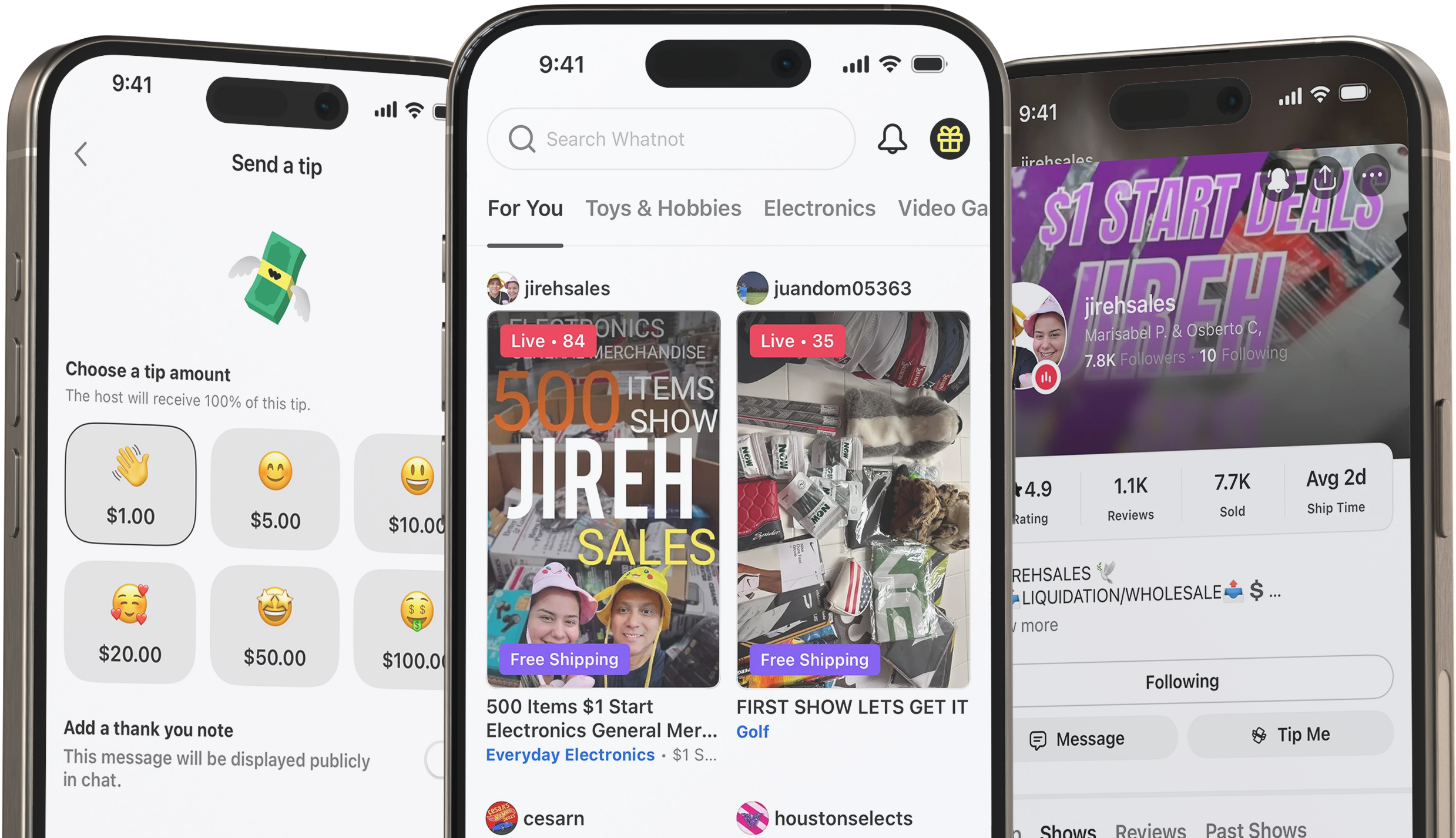
The global live shopping market is projected to reach $35 billion by 2026, growing at a CAGR of 28%. Platforms like Whatnot have revolutionized the e-commerce space, combining live video selling with real-time auctions and instant checkout. Whatnot itself has seen over $1 billion in gross merchandise sales and attracted millions of active users. Digital Software Labs delivers scalable Whatnot app clone solutions that support growth, customization, and long-term operational stability.
A Whatnot clone is ideal for brands, creators, and marketplaces looking to replicate the live-commerce experience with full control over branding, features, and monetization. Built using a modular structure, the Whatnot clone script supports rapid deployment while allowing flexibility for future expansion.






The Whatnot clone development process is structured to support live selling, real-time bidding, and secure transactions. Each stage focuses on technical accuracy, interaction flow, and long-term scalability, ensuring the solution performs reliably under live conditions while adapting to business growth.
Market research identifies buyer behavior, auction timing expectations, and live engagement patterns. Competitor analysis helps refine seller interaction, bidding flow, and content presentation. This approach ensures the Whatnot clone aligns with real usage trends found in digital asset marketplaces where ownership clarity and live interaction matter, as reflected in ecosystems built around solutions such as the Rarible Clone App.
UI/UX design focuses on clarity during live sessions, responsive bidding views, and distraction-free navigation. Seller interfaces, bid updates, and checkout elements are structured to support fast decision-making. Design consistency follows interaction logic seen in exchange-driven environments similar to the Uniswap Clone App, where user confidence depends on clear visual feedback.
Selecting the right tech stack is critical for handling concurrent users, live streams, and transaction accuracy. Backend systems are chosen to support scalability without latency. Data organization and seller inventory handling follow large-scale commerce structures aligned with systems used in solutions such as the Alibaba Clone App, where volume and performance must coexist.
Backend development connects live streaming, bidding logic, authentication, and payment handling into a unified system. APIs manage real-time updates, notifications, and session synchronization. Routing logic and availability handling are influenced by scheduling and discovery workflows applied in systems such as the Expedia Clone App, where timing and accuracy are essential.
Quality assurance validates live stream stability, bid synchronization, and transaction reliability across varying network conditions. Stress testing ensures the system performs consistently during peak activity. Testing methods reflect interaction-heavy resale environments similar to those supported by the OfferUp Clone App, where trust depends on accurate updates.
After launch, ongoing monitoring ensures stable live sessions and smooth bidding activity. Post-launch support includes performance optimization, security updates, and feature refinements based on real usage data, ensuring the Whatnot clone remains reliable as engagement grows.
The Whatnot clone app follows a clear operational flow that supports live selling, real-time interaction, and secure transactions. Each step is designed to ensure users can move smoothly from onboarding to purchase completion while maintaining transparency and engagement throughout live sessions.
User onboarding begins with a structured registration process that establishes verified access and account identity. This step allows users to manage profiles, participate in live sessions, and track activity history. Account setup and verification logic are structured around controlled access models used in service-driven such as the Zocdoc Clone App, where accuracy and user trust are critical from the first interaction.
Product listing enables sellers to upload items with detailed descriptions, images, pricing rules, and auction timing. Listings are prepared in advance to ensure smooth live sessions without interruptions. Inventory organization and seller-buyer visibility follow structured listing workflows aligned with commerce-focused environments such as the eBay Clone App, where clarity and item presentation influence purchasing decisions.
Live streaming allows sellers to showcase products in real time while engaging directly with viewers. Streaming sessions support demonstrations, auction countdowns, and seller commentary. Content delivery and session management are structured using organized content distribution logic similar to learning-driven systems such as the LMS Clone App, where live engagement and content flow must remain stable and synchronized.
Real-time interaction enables users to place bids, send messages, and receive updates instantly during live sessions. Bid synchronization ensures all participants view accurate pricing and timing information without delay. This interaction layer strengthens engagement while maintaining fairness throughout auctions.
Instant checkout allows winning bidders to complete purchases immediately after the auctions end. Secure payment processing, order confirmation, and transaction validation occur without disrupting the viewing experience. Checkout flow and purchase finalization align with reservation-based transaction handling used in systems such as the HomeAway Clone, where timing and confirmation accuracy are essential.
Admin oversight provides full control over users, listings, live sessions, and transactions. Administrators can monitor activity, resolve disputes, and enforce policies through a centralized management interface. Oversight ensures operational stability while maintaining a fair and transparent environment for all participants.
The Whatnot clone app includes a carefully structured set of features that support live selling, bidding accuracy, secure transactions, and seller management. Each feature is designed to maintain real-time engagement while ensuring operational stability during periods of high user activity.

Live streaming enables sellers to present products in real time while interacting directly with buyers. High-quality video delivery, session stability, and audience visibility are prioritized to maintain engagement throughout live events. Real-time session coordination and host-driven interaction follow transport-based flow logic used in solutions such as the Cabify Clone, where timing and continuity play a critical role in user participation.

Real-time bidding allows users to place offers instantly while viewing live product demonstrations. Bid updates are synchronized across all viewers to maintain fairness and transparency during auctions. Competitive bidding mechanics and time-sensitive interactions reflect contribution-driven workflows present in funding-focused systems, including the Kickstarter Clone App, where active participation directly influences outcomes.

Secure payment gateway integration ensures that transactions are processed accurately and safely once auctions conclude. Payment confirmation, order validation, and settlement occur without delays, supporting trust during high-value exchanges. Transaction handling and fund flow management align with financial-grade systems used in digital exchange environments represented by the Coinbase Clone App, where precision and security are essential.

User profiles allow buyers and sellers to manage account details, activity history, and engagement preferences. Authentication mechanisms ensure verified access while protecting user data. Profile ownership and identity validation follow asset-based account control models applied in digital ownership ecosystems represented by the SuperRare Clone App, where authenticity and traceability remain central.

Push notifications keep users informed about live sessions, bid status, purchase confirmations, and upcoming events. Alerts are delivered in real time to support timely engagement without overwhelming users. Notification timing and relevance follow demand-driven communication patterns observed in service coordination by the Grubhub Clone App, where timely updates influence user response.

Item listing and management allow sellers to organize products, set auction parameters, and control availability with precision. Listings are prepared ahead of live sessions to ensure smooth execution and clear visibility for buyers. Structured listing control supports consistent presentation and operational clarity throughout the selling process.
A strong live shopping experience depends on flow, adaptability, readiness, and security. Each aspect of the Whatnot clone is structured to support real-time engagement, smooth transactions, and operational confidence while maintaining consistency during high user activity.
Effortless flow ensures users can move seamlessly from live viewing to bidding and checkout without interruptions. Every interaction is designed to remain intuitive, reducing friction during time-sensitive actions. Creator-led engagement mechanics and audience interaction models reflect structured real-time communication patterns found in solutions such as the Cameo Clone App, where timing and direct engagement play a central role in user experience.
Flexible setup allows businesses to adjust auction rules, seller controls, and transaction logic based on category needs. This adaptability supports multiple selling formats while maintaining operational clarity. Order handling and fulfillment flexibility align with commerce-driven workflows used in solutions such as the Drizly Clone App, where controlled customization supports consistent transaction outcomes.
Market readiness ensures the solution can support immediate launch without structural changes. Live session handling, bidding accuracy, and payment flow are fully prepared for active usage. Growth-oriented architecture reflects demand management principles applied in high-volume service environments represented by the Rappi Clone App, where scalability and responsiveness are essential from day one.
Security measures protect user data, transactions, and live interactions across the system. Authentication controls, encrypted data handling, and monitored activity ensure trust remains intact during auctions and purchases. These safeguards maintain stability while reducing exposure to operational risks during live selling sessions.
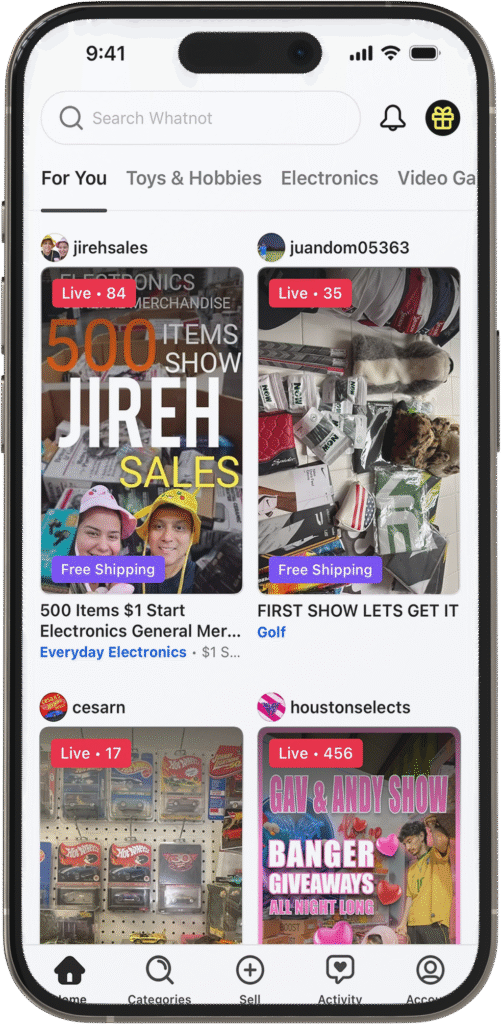
Live shopping has reshaped how buyers and sellers interact in digital commerce. Investing in a Whatnot clone app allows businesses to combine real-time engagement with transactional efficiency while building a strong presence in a rapidly evolving market. Each reason below reflects strategic value rather than short-term trends.
Live commerce continues to gain momentum as audiences prefer interactive buying experiences over static listings. A Whatnot clone supports real-time communication, instant feedback, and community-driven engagement. Growth patterns mirror interaction-focused ecosystems reflected in solutions, including the WeChat Clone App, where direct engagement and live interaction drive sustained user activity.
A Whatnot clone supports multiple revenue channels, including seller commissions, featured listings, live event fees, and premium tools. This diversification reduces reliance on a single income source while improving financial stability. Transaction-based monetization structures align with peer-to-peer payment environments represented by the Venmo Clone App, where flexible payment flows support frequent user activity.
Real-time auctions, live seller interaction, and instant purchase confirmation create a highly engaging buying environment. Users remain actively involved throughout the session, increasing trust and participation. Engagement is driven by responsiveness and clarity rather than passive browsing, strengthening long-term user retention.
Launching with a Whatnot clone significantly shortens development timelines compared to building a solution from the ground up. Core live commerce features, bidding logic, and transaction handling are already structured, allowing faster market entry without sacrificing stability or scalability.
Owning a live shopping solution helps businesses establish a distinct brand identity built around interaction and transparency. Direct buyer-seller engagement reinforces credibility while maintaining control over transaction flows. Payment reliability and financial trust models reflect structured billing environments represented by the Stripe Clone App, supporting consistent brand confidence.
Version 6.0 delivers advanced refinements across live streaming, bidding accuracy, and system scalability. This release strengthens real-time synchronization, improves handling of concurrent users, and enhances transaction reliability during high-traffic live sessions. It is designed to support larger audiences while maintaining smooth interaction and consistent performance throughout live selling events.
Version 5.0 introduces usability improvements and backend optimizations aimed at smoother live session management. Seller tools were refined, checkout handling was stabilized, and notification delivery became more consistent. This update focused on reducing latency and improving user flow during auctions and purchase confirmation stages.
Version 4.0 emphasizes performance tuning and live interaction reliability. Streaming latency was reduced, auction timing logic was improved, and data handling efficiency was increased. These changes ensured smoother experiences during extended live events and improved consistency across varying network conditions.
Version 3.0 focused on strengthening core functionality and operational control. User authentication was improved, bidding validation became more reliable, and administrative oversight tools were expanded. This version provided a stronger foundation for managing live commerce activities at scale.
Version 2.0 marked a major step toward stability and usability. Foundational live streaming features were stabilized, listing management was refined, and early performance limitations were addressed. This release laid the groundwork for subsequent enhancements and feature expansion.

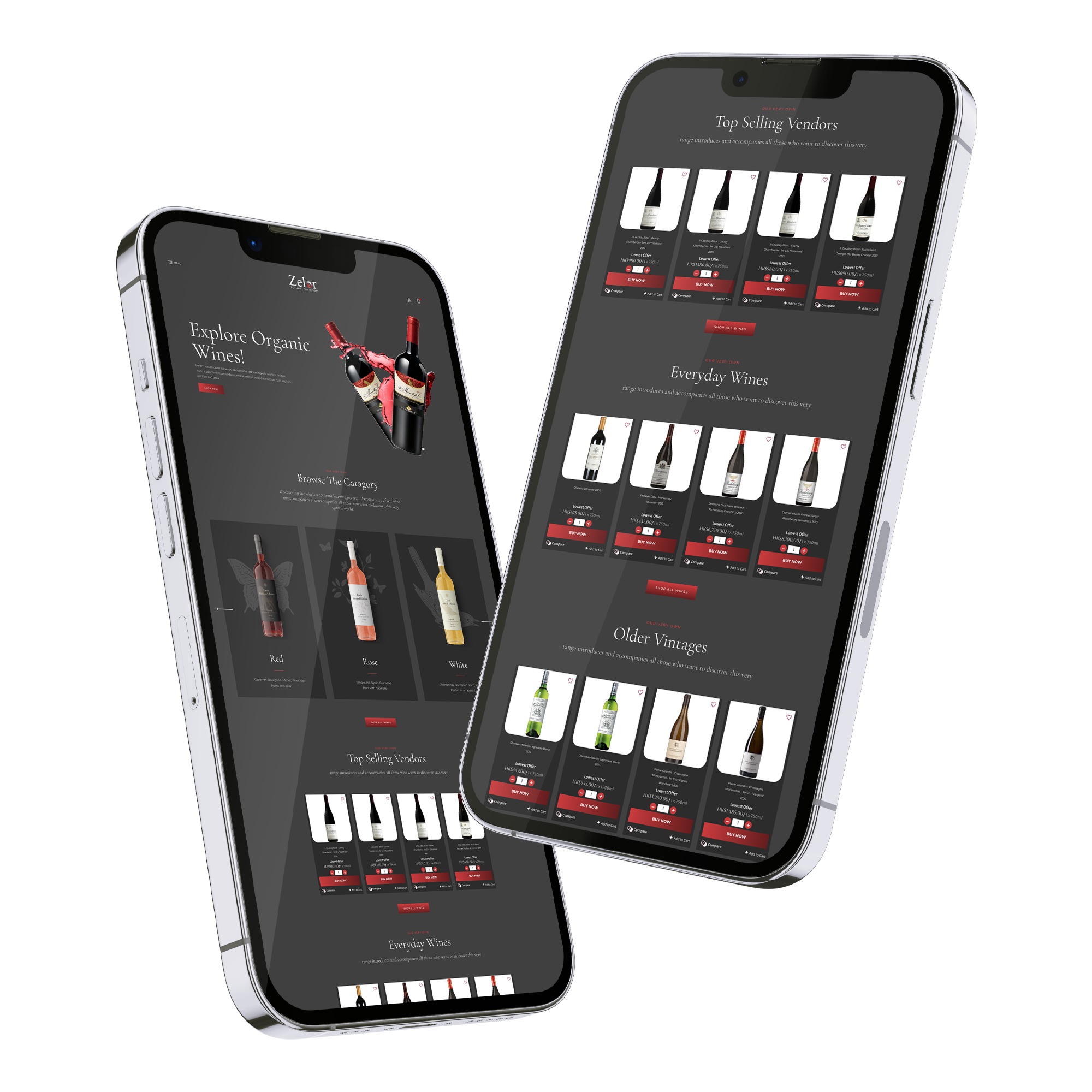
Digital Software Labs provided the expertise we needed to bring our wine marketplace to life. Their team was proactive, responsive, and ensured our vision was executed flawlessly.”

Crystal
Founder/Owner - Zelor Wines
Digital Software Labs provided the expertise we needed to turn our vision into reality. Their team was proactive, responsive, and fully committed to our success.

Louis J. Bonito
CEO - Kilooly Brands

Digital Software Labs provided the skilled engineers we needed to bring our food delivery app to life. Their team was responsive and attentive, ensuring our goals were met.

Yasir
Owner - Alger Move

Digital Software Labs delivers a structured Whatnot Clone App Development service built around live selling, real-time engagement, and secure transaction handling. Each stage is planned to support scalability, performance stability, and smooth user flow. The solution is designed to help businesses enter live commerce with confidence, supporting sellers, engaging buyers, and enabling long-term growth without added operational friction.
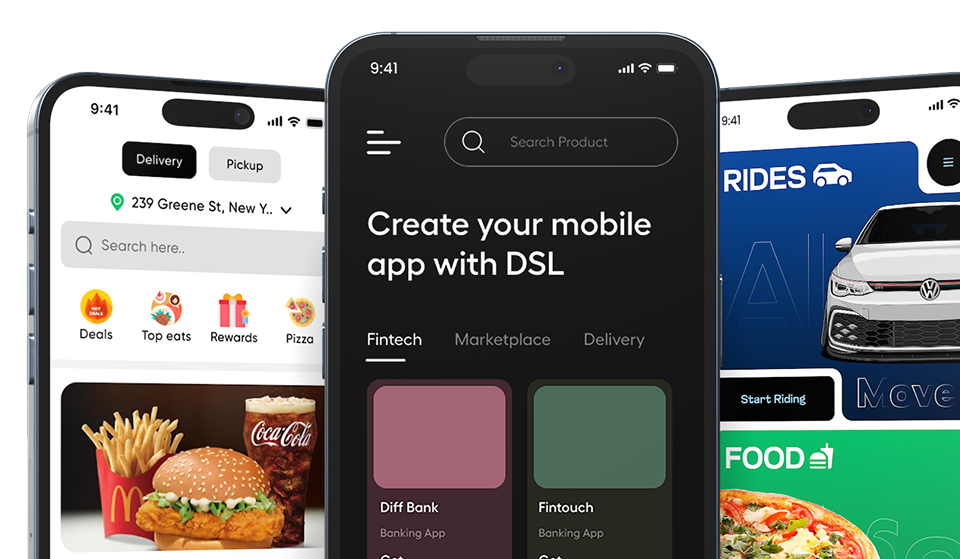
A Whatnot clone is a live shopping application built with features for real-time streaming, bidding, instant checkout, and seller–buyer interaction. It allows businesses to run live auctions, product showcases, and interactive sales events while maintaining control over branding, monetization, and user management.
Development time depends on feature depth, design complexity, and integration needs. On average, a fully functional Whatnot-like app takes between 10 to 16 weeks, including planning, development, testing, and deployment phases.
Yes. Digital Software Labs provides ongoing support and maintenance after launch, covering performance monitoring, security updates, feature enhancements, and technical assistance to ensure smooth operation as user activity grows.
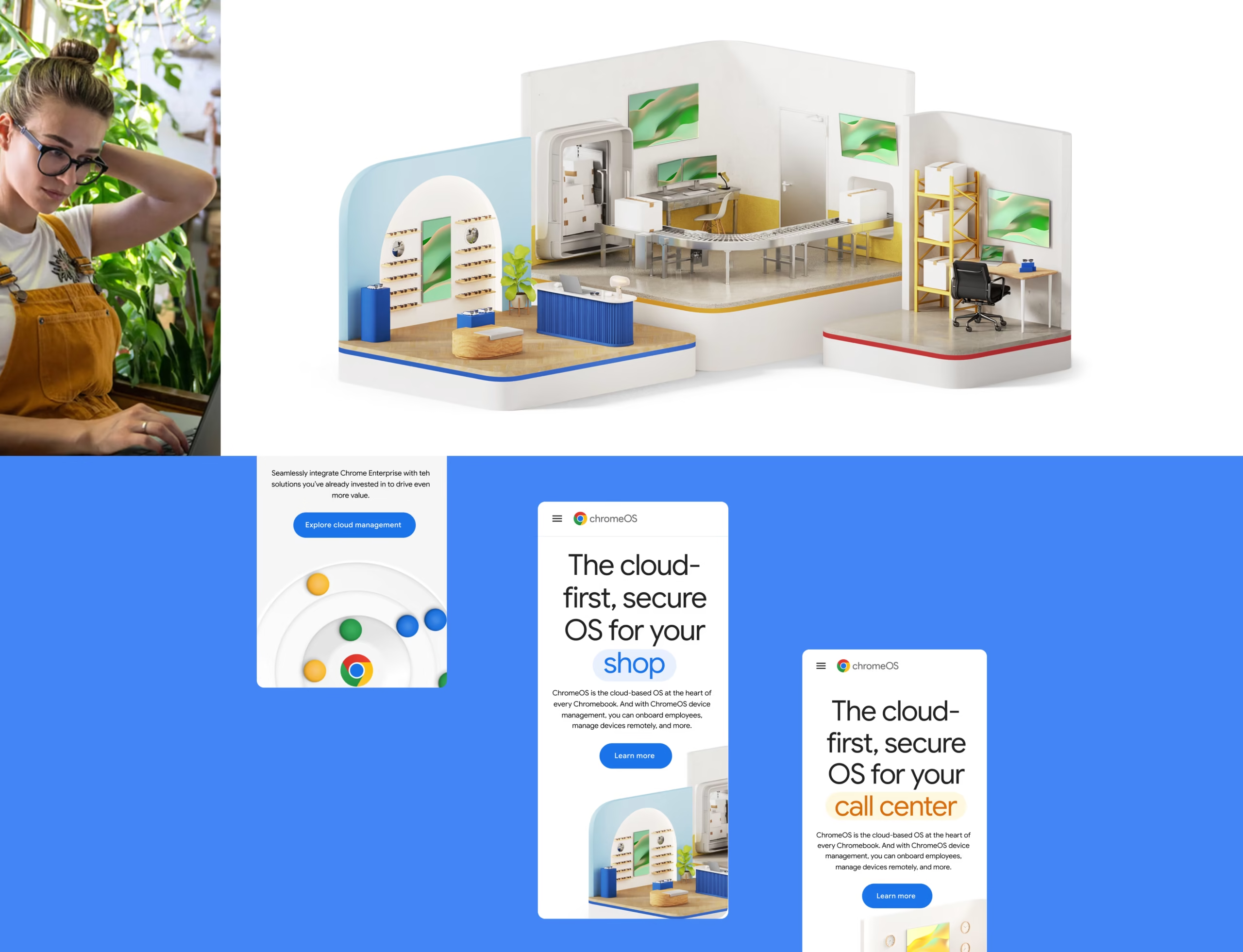
ClickBasket was developed as a next-generation online retail platform powered by artificial intelligence.
We implemented a machine learning-driven recommendation engine capable of analyzing user preferences, browsing behavior, and purchasing history to deliver highly relevant product suggestions.
The system integrates intelligent search, automated product categorization, and a conversational shopping assistant that guides customers through discovery and checkout. Retail analytics tools provide business owners with actionable insights into purchasing trends and customer lifetime value.
Want similar results for your business?
AI personalization engine.
Delivered smart product recommendations in real time.
Predictive search upgrade.
Enhanced product discovery through behavioral insights.
Conversational AI integration.
Added a virtual assistant for guided shopping journeys.
Retail analytics deployment.
Enabled data-driven inventory and sales decisions.
We specialize in developing eye tracking-based digital biomarkers, revolutionizing the way we understand and monitor cognitive processes in real-time.We specialize.
Marketly was built as a creator-first digital marketplace designed to simplify how independent creators sell products and digital assets to their communities.
We developed a scalable commerce infrastructure supporting digital downloads, physical goods, subscription services, and audience engagement tools. The platform includes intuitive storefront management, real-time sales analytics, and performance tracking dashboards.
The goal was to create an ecosystem where creators could operate like full-scale businesses, with automation, insights, and smooth transaction flows driving sustainable growth.
Infrastructure availability
Increase in creator transaction volume
Want similar results for your business?
Creator-first ecosystem launch.
Built a marketplace tailored to independent digital entrepreneurs.
Unified commerce integration.
Combined storefronts, payments, and analytics into one platform.
Scalable transaction framework.
Supported growing user and product volumes without friction.
Revenue growth enablement.
Equipped creators with tools to monetize sustainably.
We specialize in developing eye tracking-based digital biomarkers, revolutionizing the way we understand and monitor cognitive processes in real-time.We specialize.
For a global mobility leader, we engineered a robust AI infrastructure designed to process large-scale transportation data and convert it into actionable intelligence.
Our solution focused on real-time ride demand prediction, traffic behavior analysis, and automated operational decision-making. By building scalable data pipelines and intelligent modeling frameworks, we enabled faster dispatch logic, improved driver allocation strategies, and optimized route efficiency.
The platform was built with elasticity in mind, capable of handling fluctuating demand volumes while maintaining speed, stability, and security across regions.
Data events processed annually
Faster operational decision cycles
Improved route optimization efficiency
Infrastructure availability
Want similar results for your business?
Predictive mobility intelligence.
Shifted operations from reactive dispatching to AI-powered demand forecasting.
Real-time data automation.
Enabled instant decision-making through high-speed analytics pipelines.
Global scalability upgrade.
Built cloud infrastructure capable of handling massive ride volumes seamlessly.
Operational efficiency boost.
Reduced manual processes with intelligent automation systems.
We specialize in developing eye tracking-based digital biomarkers, revolutionizing the way we understand and monitor cognitive processes in real-time.We specialize.