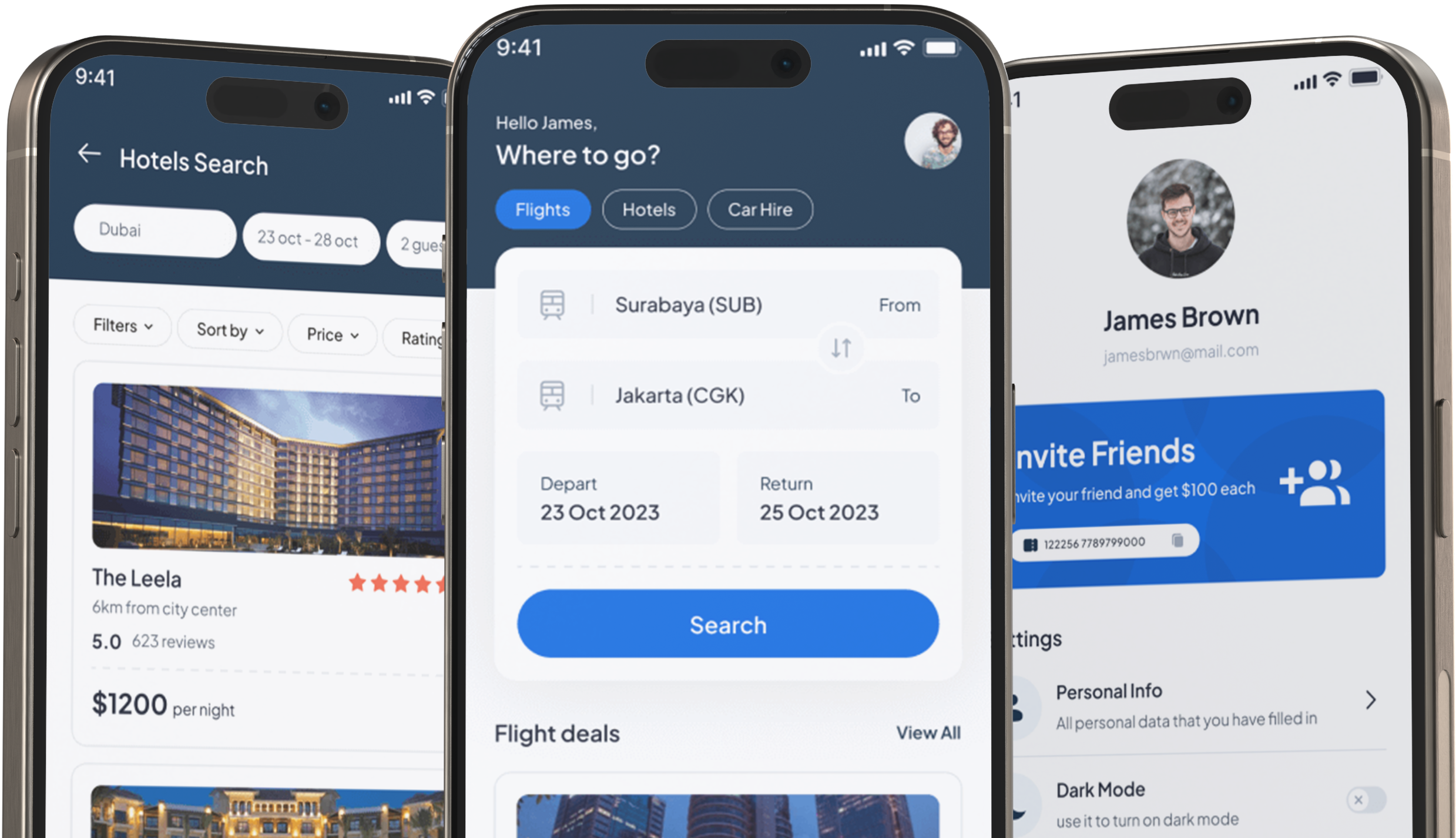
The online travel booking market is projected to exceed $1.3 trillion by 2030, driven by rising global travel demand and widespread adoption of mobile and web‑based booking platforms. Our Skyscanner clone app development approach focuses on intelligent search, accurate price comparison, and seamless booking flows that align with evolving traveler expectations. Built as a complete travel booking platform, the Skyscanner clone software enables users to compare flights, hotels, and rental services in real time.






The Skyscanner clone app is structured to support rapid discovery, transparent price comparison, and controlled post-booking management through a consistent, user-focused workflow designed for travel decision accuracy.
Users register using verified credentials, enabling secure access to saved searches, booking history, and personalized preferences. Account handling follows structured identity management patterns similar to multi-user listing systems such as the eBay Clone App, where secure profiles support repeated transactions and data continuity.
The system scans multiple providers in parallel to retrieve live flight, hotel, and vehicle availability. This aggregation logic reflects high-volume data handling approaches often used in structured content environments like the LMS Clone App, where real-time indexing and fast retrieval are critical.
Advanced comparison algorithms rank results using pricing, duration, stopovers, and ratings. Clear filtering ensures users can evaluate options without hidden cost distortions or artificial prioritization.
Users finalize selections based on travel goals, budget parameters, and schedule flexibility. The interface supports confident decision-making by maintaining consistency across all comparison variables.
Secure payment processing confirms bookings instantly, generating digital receipts and itinerary records while maintaining compliance and transaction integrity. Payment handling aligns with reservation confirmation flows used in structured booking environments such as the Rarible Clone App, where verification and confirmation integrity are essential.
After confirmation, users manage cancellations, rescheduling, refunds, and notifications through a centralized dashboard. Lifecycle control mirrors structured reservation management systems applied in property booking workflows like the HomeAway Clone, ensuring consistency across post-booking actions.
Our Skyscanner clone development process follows a structured lifecycle that prioritizes clarity, scalability, and operational stability from initial planning through long-term system maturity.
Business objectives, monetization models, and third-party integrations are documented in detail to shape a reliable technical foundation. Early-stage planning mirrors validation-driven workflows used in funding-oriented digital products similar to the Kickstarter Clone App, where scope definition directly impacts long-term viability.
Brand identity, regional preferences, and service positioning are applied to create a fully customized Skyscanner clone website. This stage ensures consistent presentation across markets while maintaining flexibility for localized travel regulations and audience behavior.
Search intelligence, fare prediction logic, multi-currency handling, and localization layers are introduced based on real usage patterns. Feature prioritization reflects transaction-sensitive system design approaches seen in secure financial ecosystems such as the Coinbase Clone App, where accuracy and responsiveness are critical.
Comprehensive testing validates pricing accuracy, availability consistency, and system stability under heavy concurrent search loads. Performance validation follows stress-handling principles commonly applied in high-volume order systems like the Grubhub Clone App, where reliability under peak demand is essential.
Controlled deployment strategies ensure uptime continuity, booking integrity, and minimal operational disruption. Rollout plans are designed to support gradual traffic scaling while preserving data accuracy and transaction consistency.
Post-launch support focuses on monitoring, optimization, and iterative enhancements to adapt to seasonal travel trends. Ongoing system refinement reflects content-driven lifecycle management practices found in evolving digital marketplaces such as the SuperRare Clone App, where continuous tuning sustains relevance.
Digital Software Labs builds Skyscanner clone solutions with intelligence layers that extend beyond basic aggregation, focusing on accuracy, adaptability, and long-term operational control for travel-focused businesses.

Machine-driven forecasting evaluates historical pricing movements, seasonal demand, and route-specific volatility to support informed booking decisions. This predictive logic follows data interpretation patterns seen in community-driven discovery systems similar to the Clubhouse Clone App, where real-time signals influence user timing and engagement behavior.

User interaction data, previous searches, and booking preferences guide destination and service suggestions. Personalization workflows align with preference-based recommendation engines commonly applied in interest-driven digital marketplaces like the Etsy Clone App, helping increase repeat usage and session depth.

Pricing logic adapts continuously based on demand density, provider availability, and regional trends. This adaptive pricing control reflects valuation-sensitive listing strategies used in location-focused ecosystems such as the VRBO Clone App, where rate flexibility directly impacts conversion performance.

Conversational search capabilities allow users to query routes, dates, and services using natural speech patterns. This interaction model mirrors real-time query handling approaches found in mobility-centric systems like the Cabify Clone App, supporting faster discovery for users on the move.

Risk assessment engines monitor transaction behavior to identify anomalies, protect bookings, and ensure compliance. Multi-layer verification safeguards both users and providers without disrupting booking flow or confirmation speed.

Administrative dashboards present actionable insights into search demand, conversion ratios, supplier performance, and revenue distribution. Centralized visibility enables data-driven decisions while maintaining control over operational efficiency and partner relationships. The Vimeo clone app also provides powerful dashboard features, offering insights that enhance platform management and improve overall user experience.
Digital Software Labs applies enterprise-grade engineering principles to travel technology projects, combining domain understanding with scalable system design to support long-term growth, reliability, and partner integration across global travel ecosystems.
Every Skyscanner clone development initiative begins with structured market research, revenue pathway evaluation, and scalability forecasting. Planning frameworks follow discovery-driven methodologies often required in visually curated marketplaces such as the Fancy Clone App, where early positioning and audience targeting directly influence long-term traction and monetization stability.
User journeys are carefully mapped to reduce abandonment and improve booking completion across devices. Design decisions prioritize clarity, speed, and trust signals, reflecting usability patterns seen in high-traffic classified ecosystems like the Craigslist Clone App, where frictionless navigation plays a key role in sustained engagement.
Modular architectures are implemented to support API growth, supplier onboarding, and service expansion without structural rework. This development approach aligns with service-oriented execution models used in professional service coordination systems similar to the Thumbtack Clone App, where adaptability is essential for scaling operations.
Ongoing enhancements ensure compatibility with evolving airline systems, hotel providers, and payment networks. Continuous monitoring and iteration help maintain system relevance, performance stability, and regulatory alignment as global travel technology standards advance.
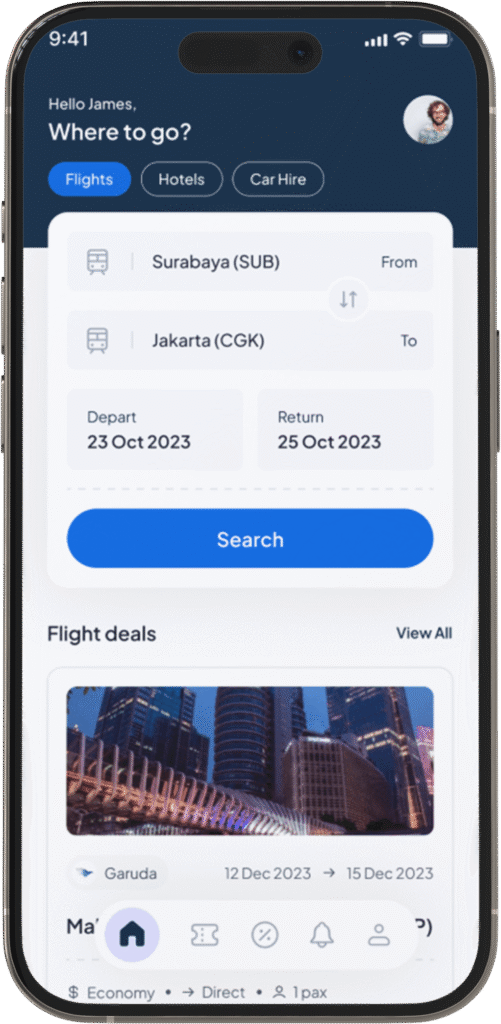
Additional modules strengthen flexibility, revenue control, and long-term user satisfaction while keeping the travel booking experience intuitive and scalable.
Admins can configure pricing logic based on demand cycles, seasonal trends, and supplier agreements. This adaptive pricing capability supports revenue optimization strategies commonly required in resale-driven ecosystems similar to those powering Shpock-style marketplace models, where price sensitivity directly impacts conversion rates.
Localized interfaces allow the Skyscanner clone app to reach diverse global audiences. Language adaptability supports regional expansion strategies often seen in location-based service networks comparable to Turo-inspired mobility systems, where geographic reach depends on seamless localization.
Built-in resolution workflows streamline handling of booking conflicts, refund requests, and service disputes. Structured issue management reflects operational discipline used in high-engagement digital services resembling Twitch-driven interaction platforms, where fast resolution maintains user trust.
Users can instantly rebook canceled or missed travel plans without repeating searches, improving retention and reducing friction. This continuity mirrors user recovery flows found in communication-focused systems like Telegram-based service experiences, where speed and continuity are essential.
Automated alerts keep users updated on price changes, booking confirmations, cancellations, and travel reminders. Timely notifications ensure consistent engagement throughout the booking lifecycle.
Support for cards, digital wallets, and region-specific payment methods enables smooth transactions across markets, reducing checkout abandonment and supporting international scalability.
This release introduces refined fare intelligence, improved search accuracy, and enhanced administrative visibility for better decision-making across travel operations.
Focused on stability and efficiency, this version improves booking workflows and optimizes system performance during peak travel seasons.
User experience and interface responsiveness were prioritized to ensure smooth navigation across devices and regions.
This update expanded core functionality and strengthened system resilience to support growing user bases.
The foundational release established essential booking and comparison capabilities required for a scalable travel search solution.

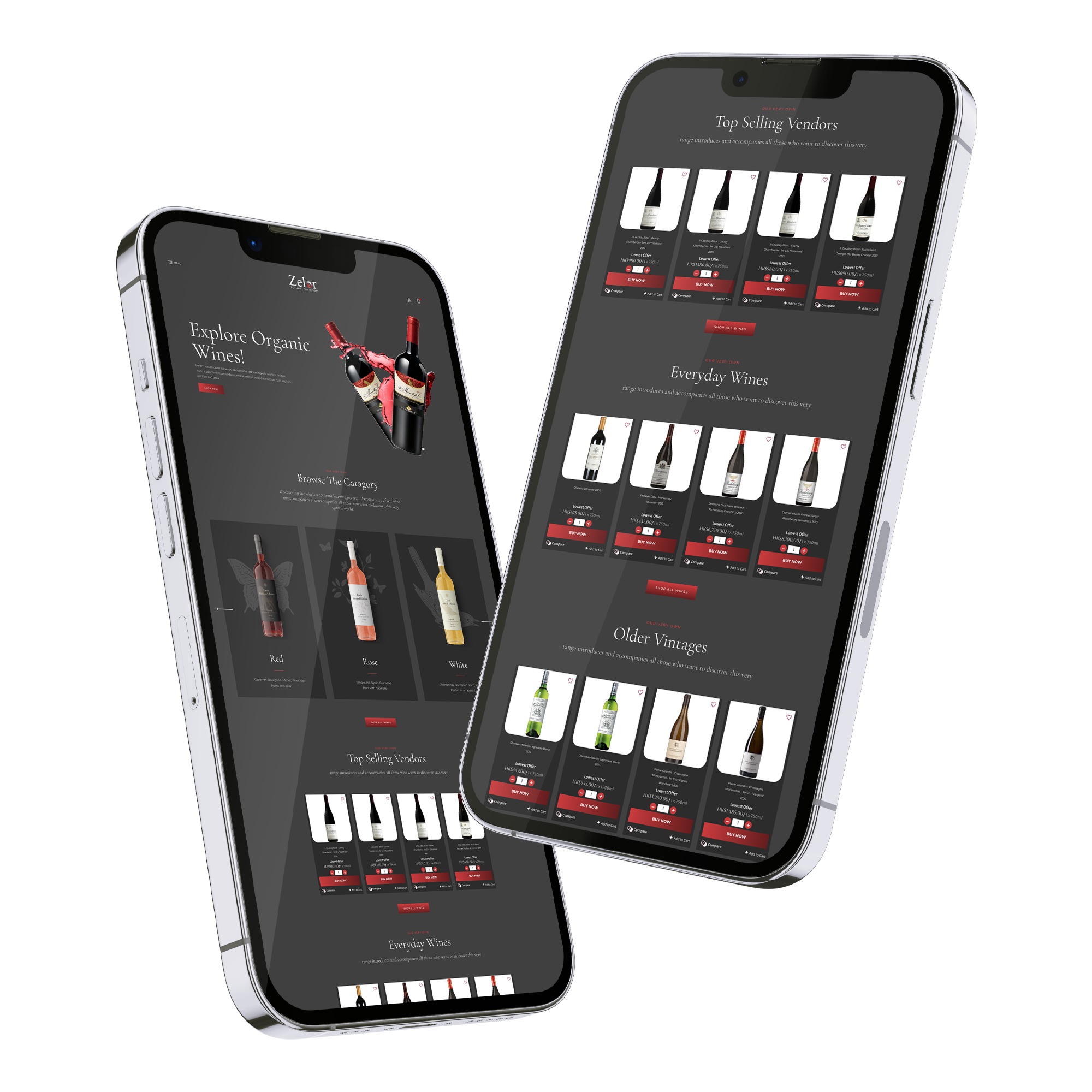
Digital Software Labs provided the expertise we needed to bring our wine marketplace to life. Their team was proactive, responsive, and ensured our vision was executed flawlessly.”

Crystal
Founder/Owner - Zelor Wines
Digital Software Labs provided the expertise we needed to turn our vision into reality. Their team was proactive, responsive, and fully committed to our success.

Louis J. Bonito
CEO - Kilooly Brands

Digital Software Labs provided the skilled engineers we needed to bring our food delivery app to life. Their team was responsive and attentive, ensuring our goals were met.

Yasir
Owner - Alger Move

Building a scalable travel search solution requires more than feature replication. Digital Software Labs delivers Skyscanner clone development with a focus on performance reliability, intelligent search logic, and long-term adaptability. From initial planning to post-launch optimization, every system is engineered to support growth, user trust, and revenue stability in competitive travel markets.
A Skyscanner clone is a travel search and comparison solution that aggregates flights, hotels, and transportation options from multiple providers, allowing users to compare prices, schedules, and services in one place. It follows a structured discovery-to-booking workflow designed for high search volumes.
Development cost depends on feature scope, data integrations, scalability requirements, and customization depth. Pricing is structured to support startups, regional travel operators, and large enterprises with flexible development phases.
Yes, profitability is driven through affiliate commissions, advertising placements, premium listings, and dynamic pricing partnerships. A well-optimized clone can generate recurring revenue as user traffic and booking volumes grow.
Yes, the Skyscanner clone script is fully customizable. It can be tailored to match your branding, target regions, supported travel services, pricing logic, and monetization model. Features such as search filters, comparison logic, payment methods, language support, and admin controls can be adjusted to align with your specific business goals and operational requirements.

ClickBasket was developed as a next-generation online retail platform powered by artificial intelligence.
We implemented a machine learning-driven recommendation engine capable of analyzing user preferences, browsing behavior, and purchasing history to deliver highly relevant product suggestions.
The system integrates intelligent search, automated product categorization, and a conversational shopping assistant that guides customers through discovery and checkout. Retail analytics tools provide business owners with actionable insights into purchasing trends and customer lifetime value.
Want similar results for your business?
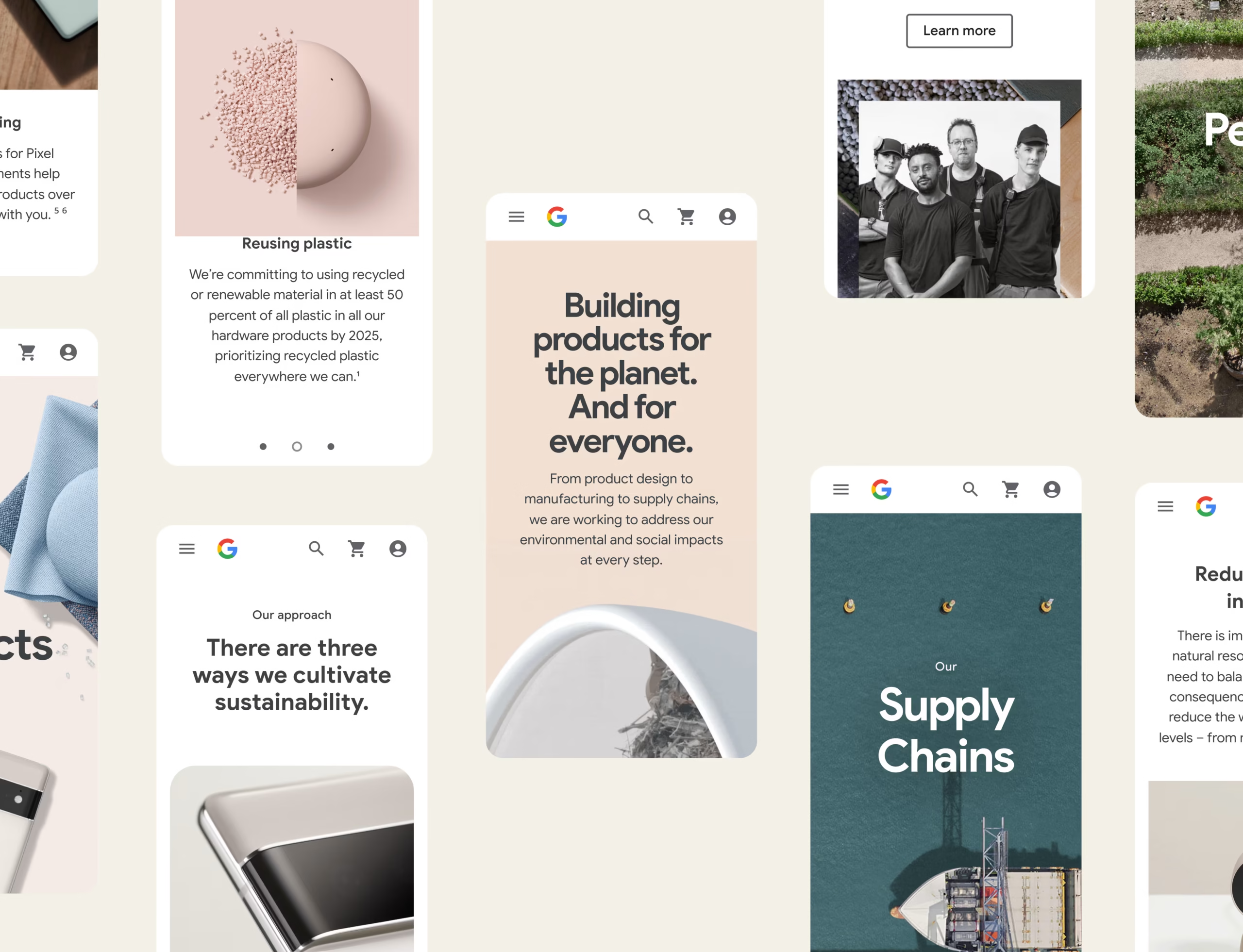
AI personalization engine.
Delivered smart product recommendations in real time.
Predictive search upgrade.
Enhanced product discovery through behavioral insights.
Conversational AI integration.
Added a virtual assistant for guided shopping journeys.
Retail analytics deployment.
Enabled data-driven inventory and sales decisions.
We specialize in developing eye tracking-based digital biomarkers, revolutionizing the way we understand and monitor cognitive processes in real-time.We specialize.
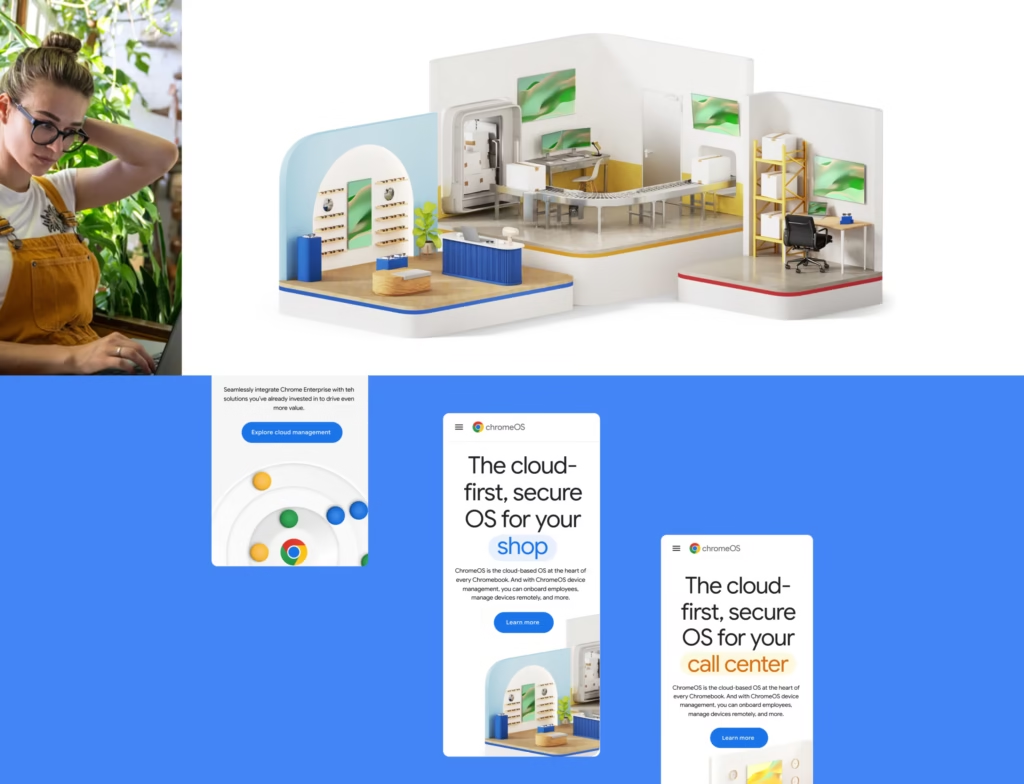
Marketly was built as a creator-first digital marketplace designed to simplify how independent creators sell products and digital assets to their communities.
We developed a scalable commerce infrastructure supporting digital downloads, physical goods, subscription services, and audience engagement tools. The platform includes intuitive storefront management, real-time sales analytics, and performance tracking dashboards.
The goal was to create an ecosystem where creators could operate like full-scale businesses, with automation, insights, and smooth transaction flows driving sustainable growth.
Infrastructure availability
Increase in creator transaction volume
Want similar results for your business?
Creator-first ecosystem launch.
Built a marketplace tailored to independent digital entrepreneurs.
Unified commerce integration.
Combined storefronts, payments, and analytics into one platform.
Scalable transaction framework.
Supported growing user and product volumes without friction.
Revenue growth enablement.
Equipped creators with tools to monetize sustainably.
We specialize in developing eye tracking-based digital biomarkers, revolutionizing the way we understand and monitor cognitive processes in real-time.We specialize.
For a global mobility leader, we engineered a robust AI infrastructure designed to process large-scale transportation data and convert it into actionable intelligence.
Our solution focused on real-time ride demand prediction, traffic behavior analysis, and automated operational decision-making. By building scalable data pipelines and intelligent modeling frameworks, we enabled faster dispatch logic, improved driver allocation strategies, and optimized route efficiency.
The platform was built with elasticity in mind, capable of handling fluctuating demand volumes while maintaining speed, stability, and security across regions.
Data events processed annually
Faster operational decision cycles
Improved route optimization efficiency
Infrastructure availability
Want similar results for your business?
Predictive mobility intelligence.
Shifted operations from reactive dispatching to AI-powered demand forecasting.
Real-time data automation.
Enabled instant decision-making through high-speed analytics pipelines.
Global scalability upgrade.
Built cloud infrastructure capable of handling massive ride volumes seamlessly.
Operational efficiency boost.
Reduced manual processes with intelligent automation systems.
We specialize in developing eye tracking-based digital biomarkers, revolutionizing the way we understand and monitor cognitive processes in real-time.We specialize.